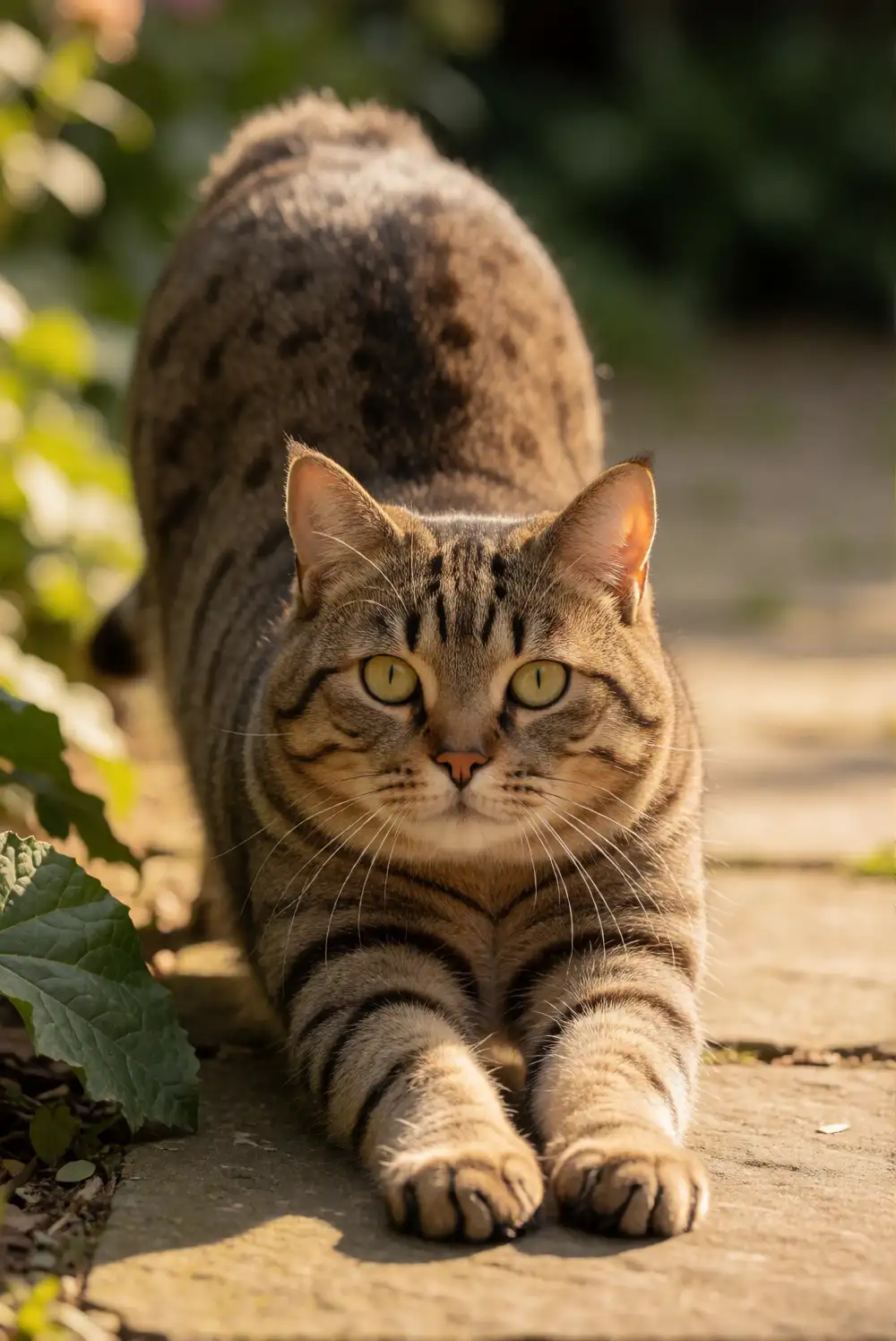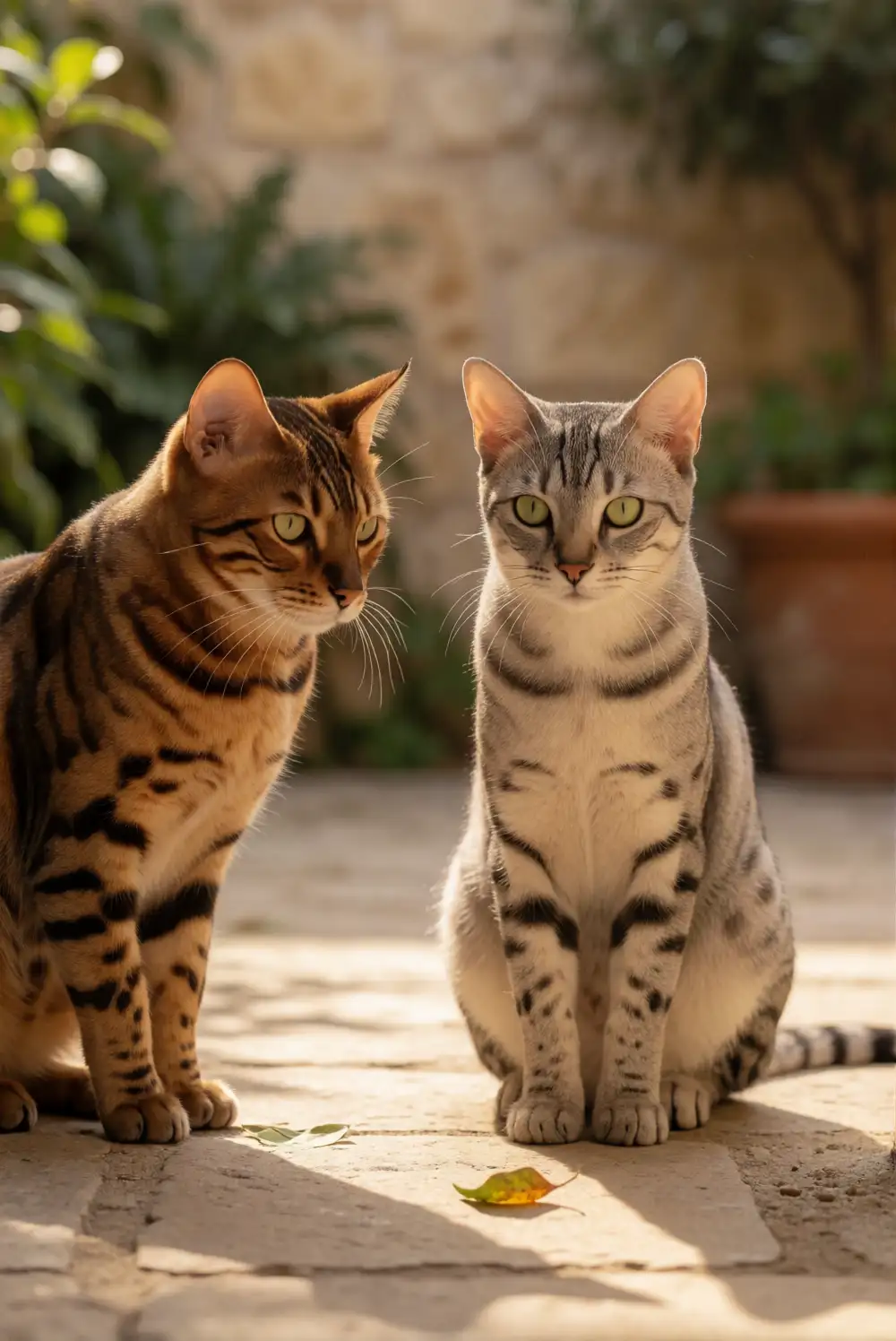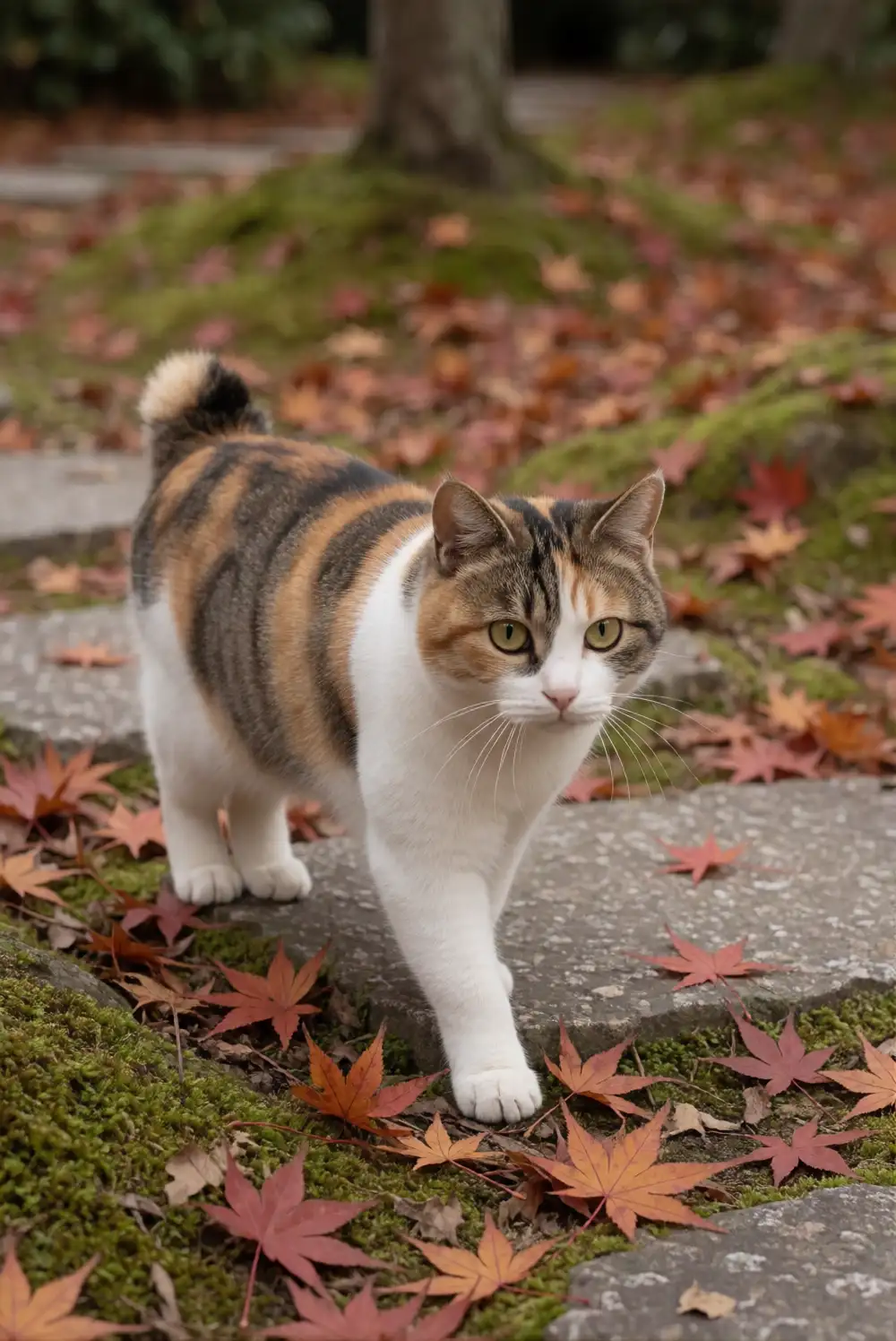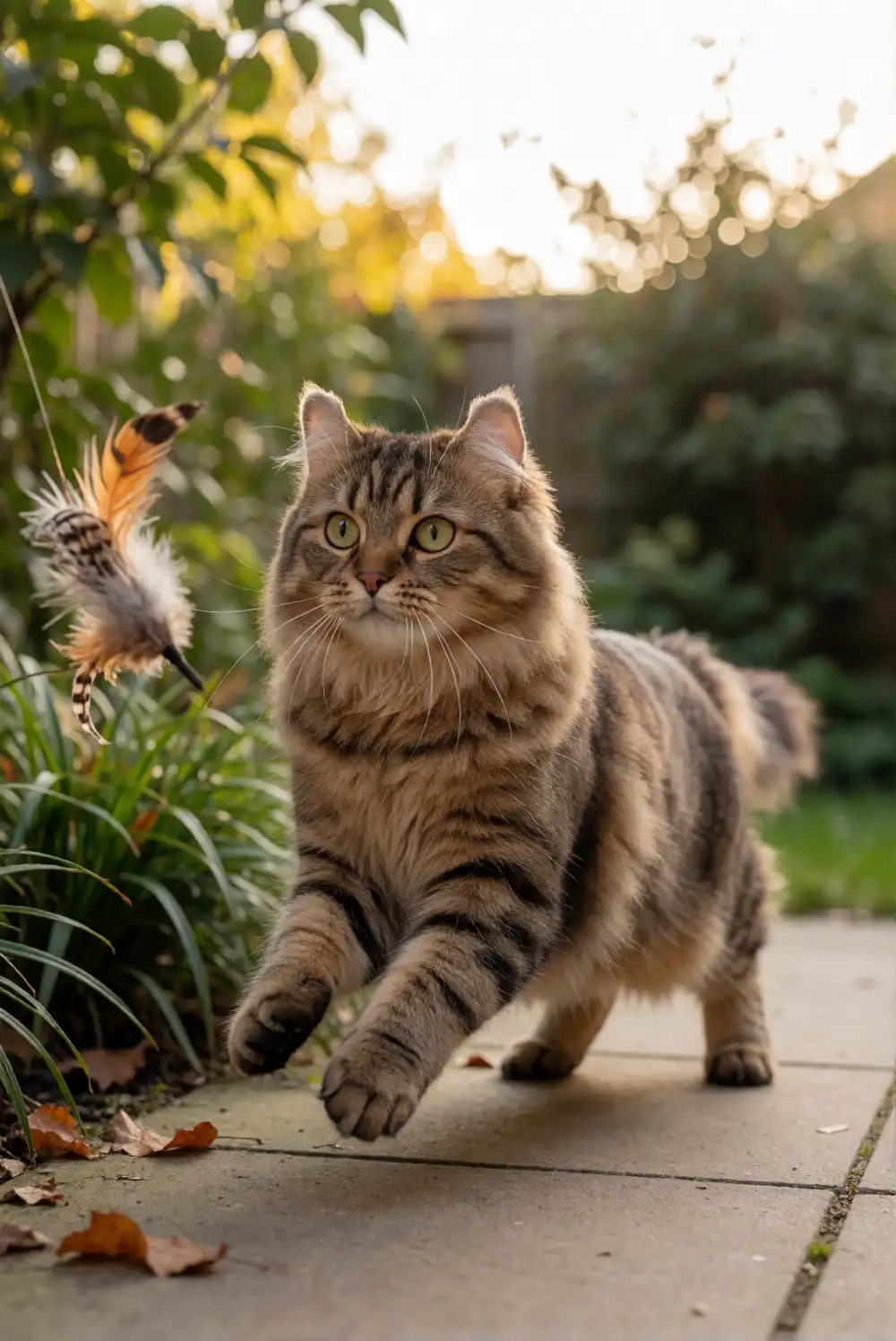
Highlander cats are lively, curious companions known for their curled ears, muscular build, and often naturally short tails. They tend to enjoy being part of household activity, so their outgoing temperament is a better fit for owners who want an interactive cat than for people seeking a very low-key pet.
What Is a Highlander Cat’s Personality Like?
Most Highlanders are confident, playful, and people-oriented. Many follow their families from room to room, investigate new sights and sounds, and seek attention when they want company. Their energetic, sometimes clownish style can make them entertaining, but it also means they need more interaction than a cat who is content to nap all day.
Breed descriptions often call Highlanders doglike because they may enjoy games such as fetch and can learn routines. That doesn’t mean every cat will behave the same way: individual personality, early handling, and the home environment all matter. Their distinctive curled ears and bobtail are physical traits, not guarantees of a particular temperament.
Energy, Play, and Daily Enrichment
Plan on giving a Highlander regular opportunities to climb, chase, stalk, and solve problems. Wand toys, food puzzles, sturdy cat trees, and short training sessions can channel their curiosity into appropriate activities. Rotate toys every few days to keep familiar games interesting, and give your cat a safe place to observe the household from above.
Interactive play is especially useful for a young, active Highlander, but it should be balanced with quiet time. Schedule several brief play sessions rather than expecting one long session to meet every need. If a cat starts ambushing feet, knocking objects down, or seeking constant attention, it may need more structured play or a more engaging environment.
How Highlanders Usually Get Along With Families
Well-socialized Highlanders can be affectionate and sociable with adults and children who treat them gently. They often prefer being near their people, but that doesn’t mean they enjoy being carried or handled whenever someone chooses. Teach children to let the cat approach, avoid pulling its ears or tail, and give it a retreat where it can rest undisturbed.
Many Highlanders can live successfully with other cats or cat-friendly dogs when introductions are gradual. Start with separate spaces, swap familiar scents, and allow brief, supervised meetings at the animals’ pace. A confident cat still needs the option to withdraw; forcing contact can create stress rather than friendship.
Training and Living With a Curious Cat
Highlanders are often quick to notice patterns, which can make reward-based training a good match. Use tiny treats or play to encourage behaviors such as coming when called, entering a carrier, or settling on a mat. Keep sessions short and upbeat, and avoid punishment: it can make a sensitive or wary cat less trusting without teaching the behavior you want.
Their curiosity calls for practical safety measures. Secure window screens, keep food and household hazards out of reach, and provide scratching surfaces in places your cat already likes to scratch. If you’re away for long stretches, plan for enrichment and daily social time rather than assuming a second pet will automatically keep your Highlander entertained.
Care, Health, and Finding a Responsible Breeder
Highlanders may have short or long coats, so grooming needs vary; regular brushing helps manage loose hair and prevents tangles in longer coats. Their ears are distinctive, but don’t bend or manipulate them. Ask your veterinarian to check the ears during routine visits and recommend cleaning only if it’s needed. A bobtail or extra toes may be part of the breed’s appearance, but neither replaces routine veterinary care.
There is limited published evidence about health conditions unique to Highlanders, so be cautious of claims that the breed is guaranteed to be free of problems. Ask breeders about veterinary records, health screening relevant to their cats, temperament, and how kittens are raised and socialized. CatHatch can help you browse available kittens and breeders; take time to verify health information and ask questions before making a commitment.
Frequently Asked Questions
Are Highlander cats affectionate?
Many Highlanders are friendly and enjoy spending time close to their families. Affection can look different from one cat to another, and some prefer playing or sitting nearby to being held.
Are Highlander cats good for first-time owners?
They can suit a first-time owner who is ready for an active, social cat and can provide daily play and enrichment. A more independent, low-energy breed may be easier for someone who wants less interaction.
Do Highlander cats get along with dogs?
Some do, especially when they are introduced slowly to a calm, cat-friendly dog. Supervise early interactions and make sure the cat always has high places and separate areas to retreat to.
Are Highlander cats high-maintenance?
They generally need more play and companionship than grooming, though longhaired individuals require more brushing. Their energy and curiosity make daily enrichment an important part of care.
Can Highlander cats be left alone during the day?
A healthy adult may manage a workday with a safe, enriched home, but kittens need more frequent care and interaction. Provide play before and after you leave, and arrange company or a check-in if your cat struggles with long periods alone.