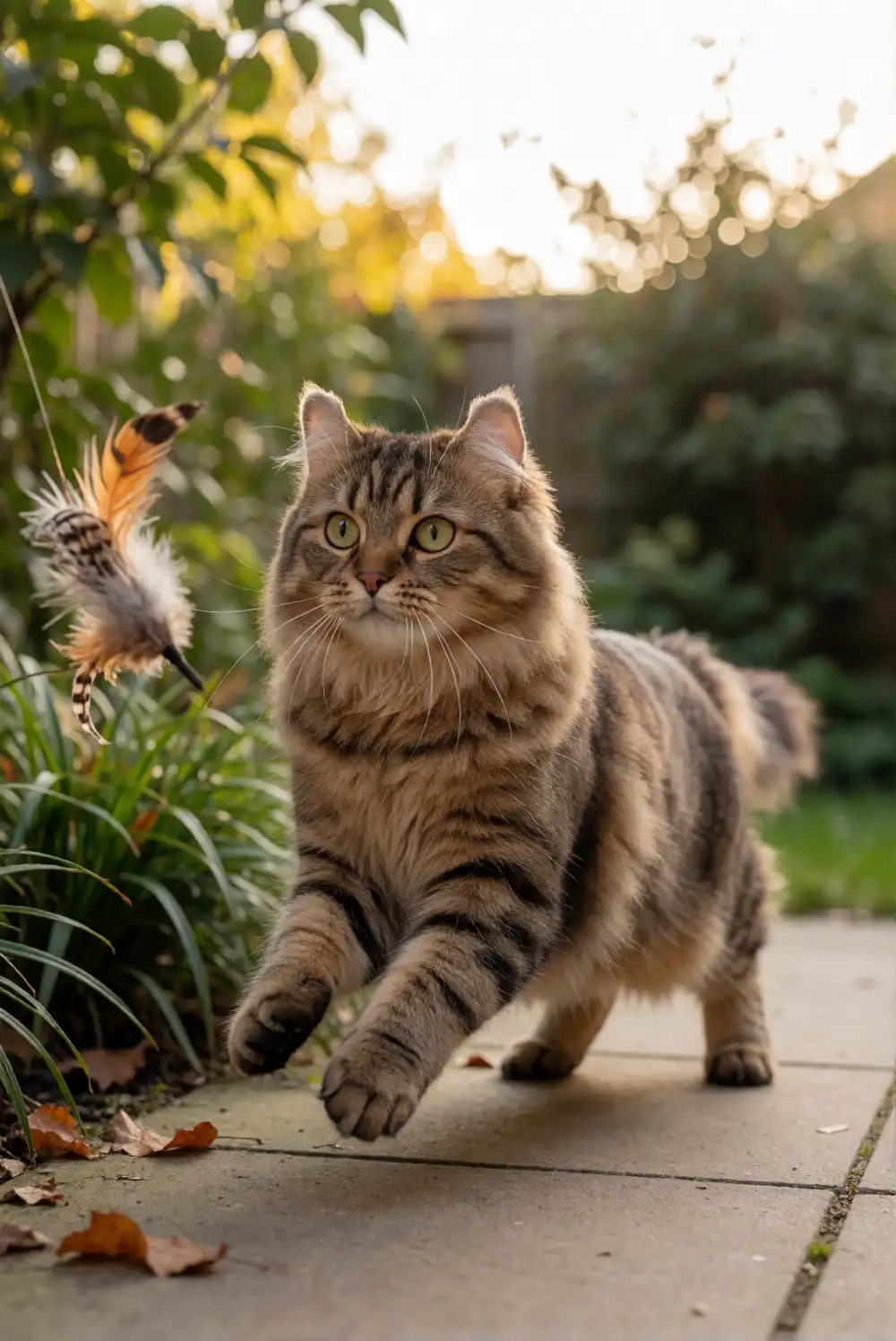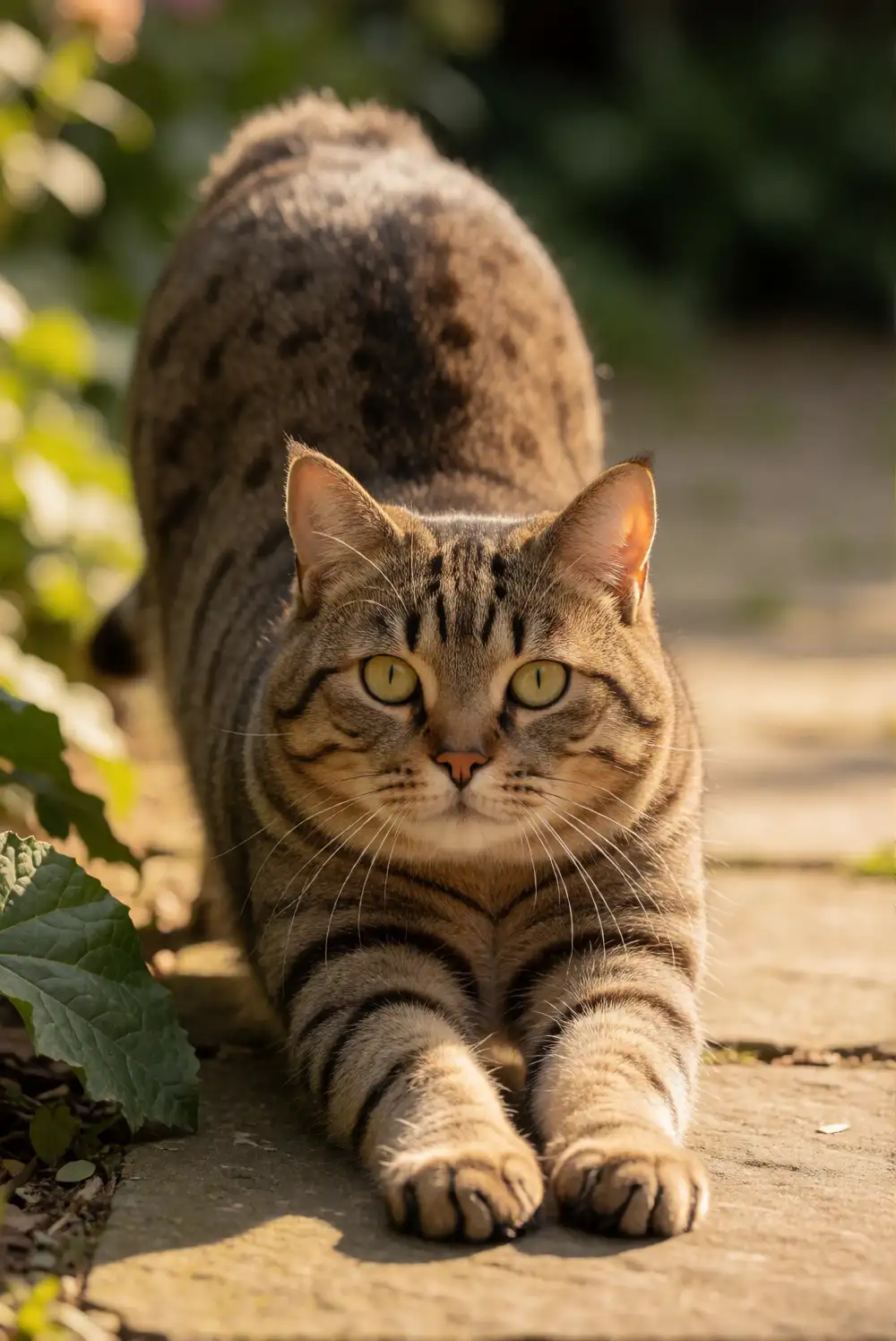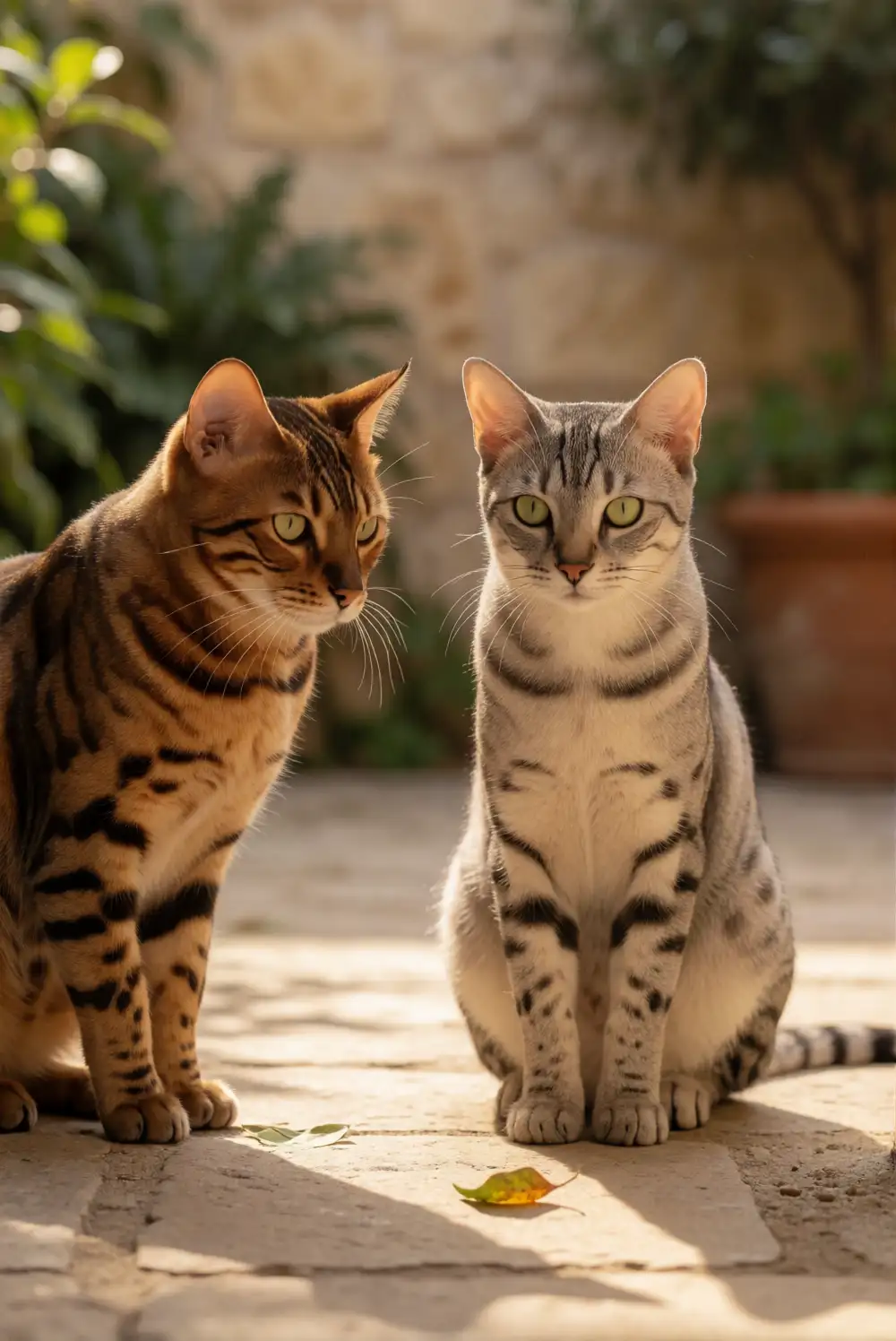
Both Bengal and Egyptian Mau cats are athletic, spotted, and hard to mistake for an ordinary-looking house cat, but their needs and personalities aren’t identical. Bengals are famously busy, curious companions; Egyptian Maus are lively, loyal cats that may take more time to warm up to new people.
Bengal vs. Egyptian Mau at a Glance
A Bengal is a muscular, medium-to-large cat developed from domestic cats and the Asian leopard cat. Today’s pet Bengals are domestic cats, but many retain a strong drive to climb, explore, play, and interact. They often weigh about 8 to 15 pounds, though individual size varies.
The Egyptian Mau is a medium-sized natural spotted breed with a distinctive alert expression and powerful hind legs. Its modern breed history includes cats brought from Egypt and developed as a pedigreed breed in the mid-20th century. Maus commonly weigh around 6 to 14 pounds. Both breeds can suit experienced owners, but neither is a good match for someone seeking a consistently low-energy lap cat.
Appearance and Grooming Differences
Bengals have short, dense coats patterned with large rosettes or marbling. Their athletic bodies, broad noses, and relatively small, rounded ears add to their wild appearance. Some have a glittery sheen to the coat. Egyptian Maus have a naturally spotted coat, with spots across the body and stripes on the face, legs, and tail. Recognized colors include silver, bronze, and smoke; their large eyes are typically gooseberry green.
Both breeds are shorthaired and usually need only weekly brushing, with more grooming during seasonal shedding. A Bengal’s pattern may be rosetted or marbled, while a Mau’s spots are distinct and formed naturally rather than through selective patterning alone. Regular nail trims, dental care, and routine ear checks matter for either cat.
Temperament, Activity, and Training
Bengals tend to be intensely curious, energetic, and people-oriented. Many enjoy puzzle feeders, fetch, clicker training, climbing, and supervised water play. Without daily activity and mental challenges, a bored Bengal may invent its own entertainment, such as opening cupboards or investigating shelves. Some are chatty, and many like to stay close to their people.
Egyptian Maus are also agile and playful, but often combine bursts of speed with a more reserved approach to unfamiliar people. They can form strong bonds with their households and may communicate with chirps or trills. A Mau may appreciate interactive play and elevated resting places while choosing to observe visitors before joining in. Individual temperament depends on socialization, background, and personality, so meet the cat and ask the breeder about its behavior.
Which Breed Fits Your Home?
Consider a Bengal if you want a highly interactive cat and can provide daily play, climbing routes, and enrichment. A secure catio or supervised outdoor time can offer extra stimulation, but neither breed should roam freely outdoors. Bengals may do well with children or other pets when introductions are gradual and everyone respects the cat’s boundaries.
An Egyptian Mau may suit a household that can give a sensitive cat predictable routines and a quiet place to retreat. Early, positive socialization can help Maus feel comfortable with visitors and everyday activity. Either breed can live in an apartment if its environment is enriched; square footage alone matters less than safe vertical space, play, and attention. If you’re comparing individual personalities, CatHatch lets you browse available kittens and breeders.
Health, Breeder Questions, and Typical Cost
Bengals can be affected by hypertrophic cardiomyopathy (HCM), progressive retinal atrophy (PRA-b), and pyruvate kinase deficiency (PK-def). Ask breeders which health screenings are appropriate for their lines and request documentation, including heart-screening information. Egyptian Maus are generally considered a healthy breed, but they still need routine veterinary care and a breeder who can discuss health history and any concerns in their family lines.
In the United States, pedigreed Bengals commonly cost about $1,500 to $3,500, while Egyptian Maus may fall in a similar range or cost more because they are less widely available. Prices vary by breeder, location, lineage, and whether a kitten is sold as a pet or for breeding. Choose an ethical breeder who raises kittens in a home environment, shares veterinary records, and asks you questions too; an unusually low price or pressure to pay quickly deserves caution.
Frequently Asked Questions
Are Bengals or Egyptian Maus more affectionate?
Both can be affectionate, but Bengals often seek frequent interaction and play. Egyptian Maus may bond closely with their family while being more cautious around strangers. Temperament varies from cat to cat.
Which cat is better for an apartment, a Bengal or an Egyptian Mau?
Either can live in an apartment if you provide daily play, climbing options, and enrichment. Bengals may need especially frequent activity to stay engaged. A calm, predictable setup can also help a Mau settle in.
Do Bengal cats need more exercise than Egyptian Maus?
Bengals often need substantial daily mental and physical activity, including interactive play and opportunities to climb. Maus are athletic too, but their activity patterns and needs vary. Plan to engage either breed every day.
Do Egyptian Mau cats get along with children and other pets?
Many Maus can live well with considerate children and compatible pets when introductions are gradual. Give the cat a safe retreat and teach children to handle it gently. A breeder can tell you how a particular kitten responds to people and other animals.
Which breed is more expensive, a Bengal or an Egyptian Mau?
Prices for both commonly start in the thousands, and the ranges can overlap. Egyptian Maus may cost more in some areas because fewer breeders are available. Compare health practices and breeder support, not just the kitten’s price.