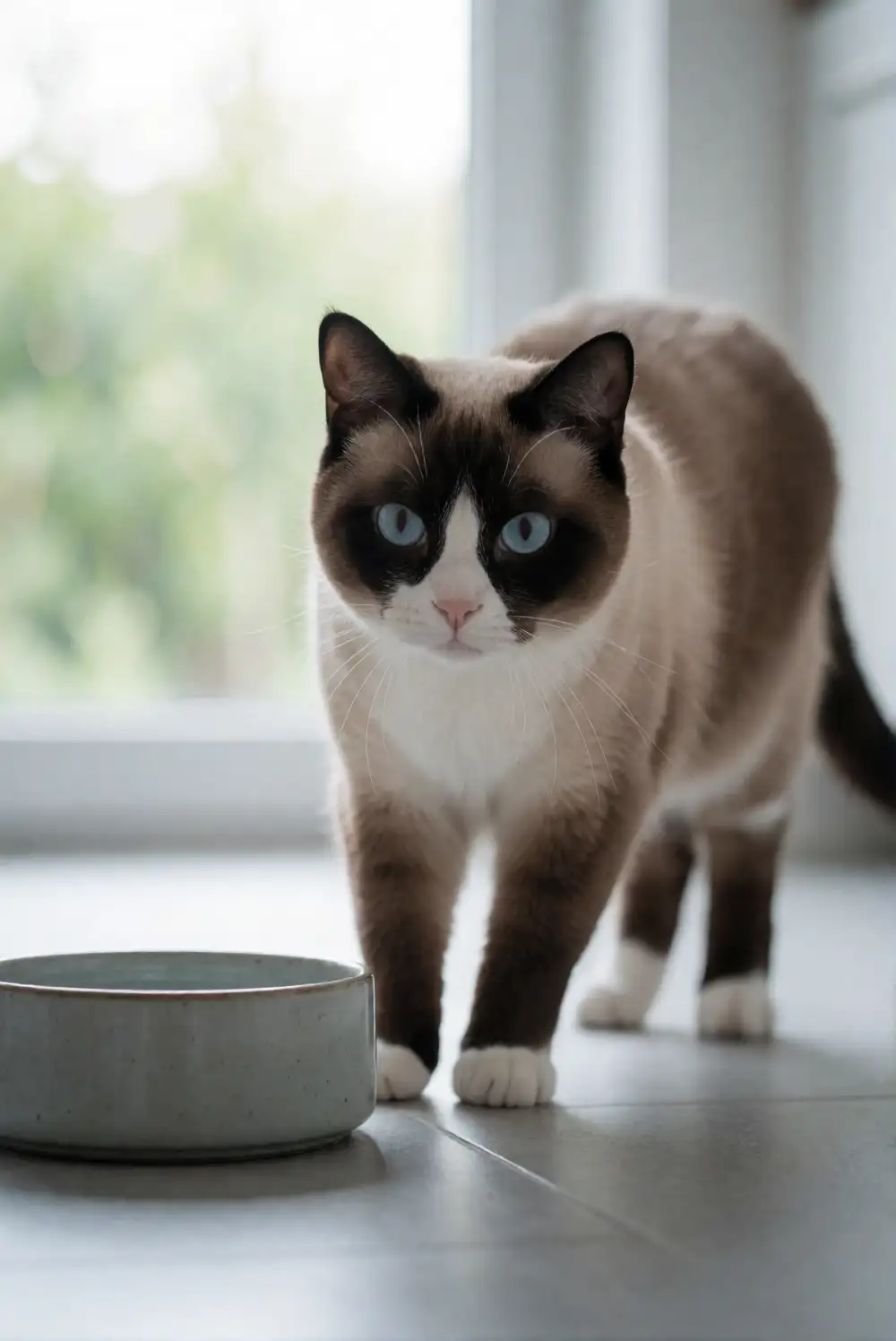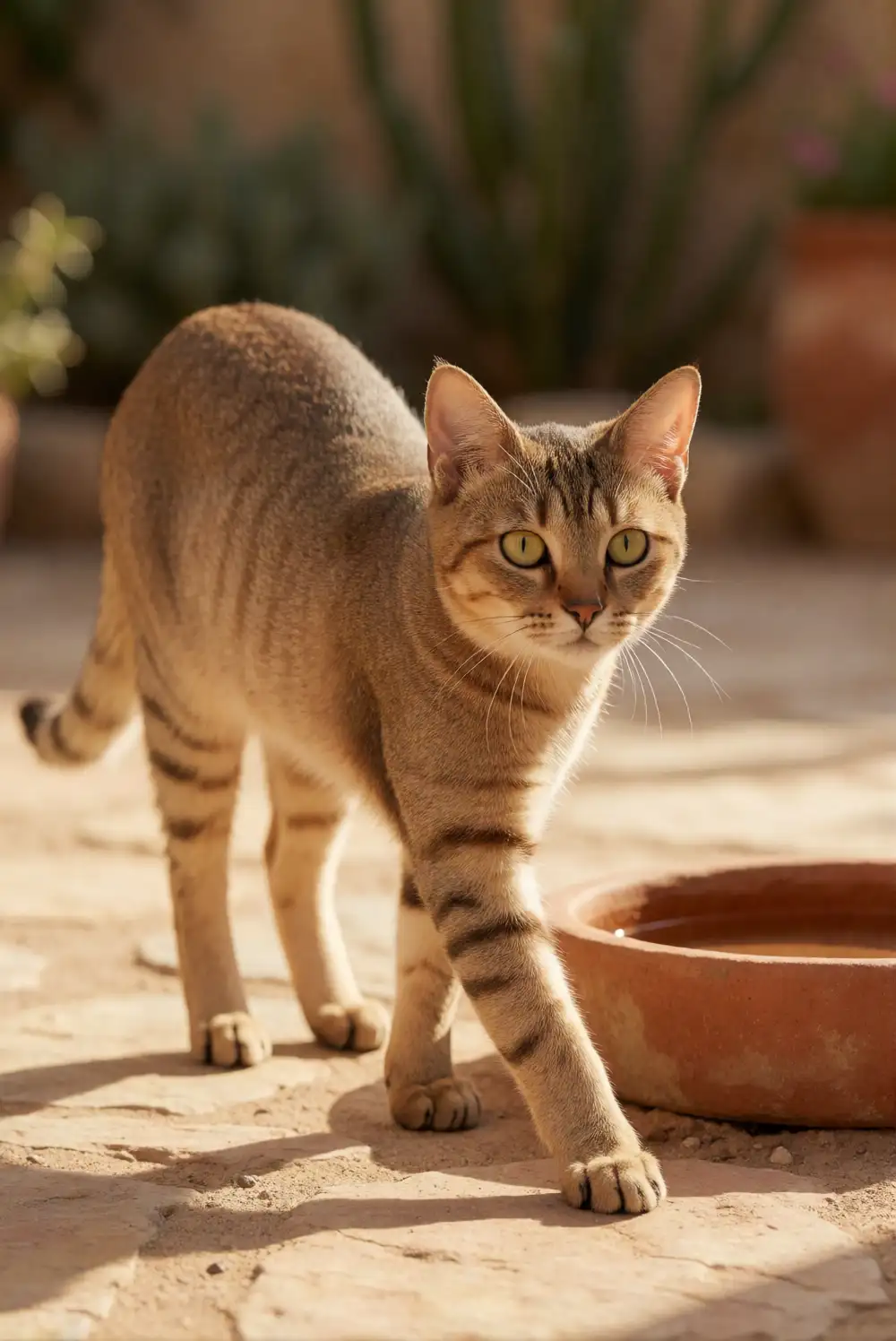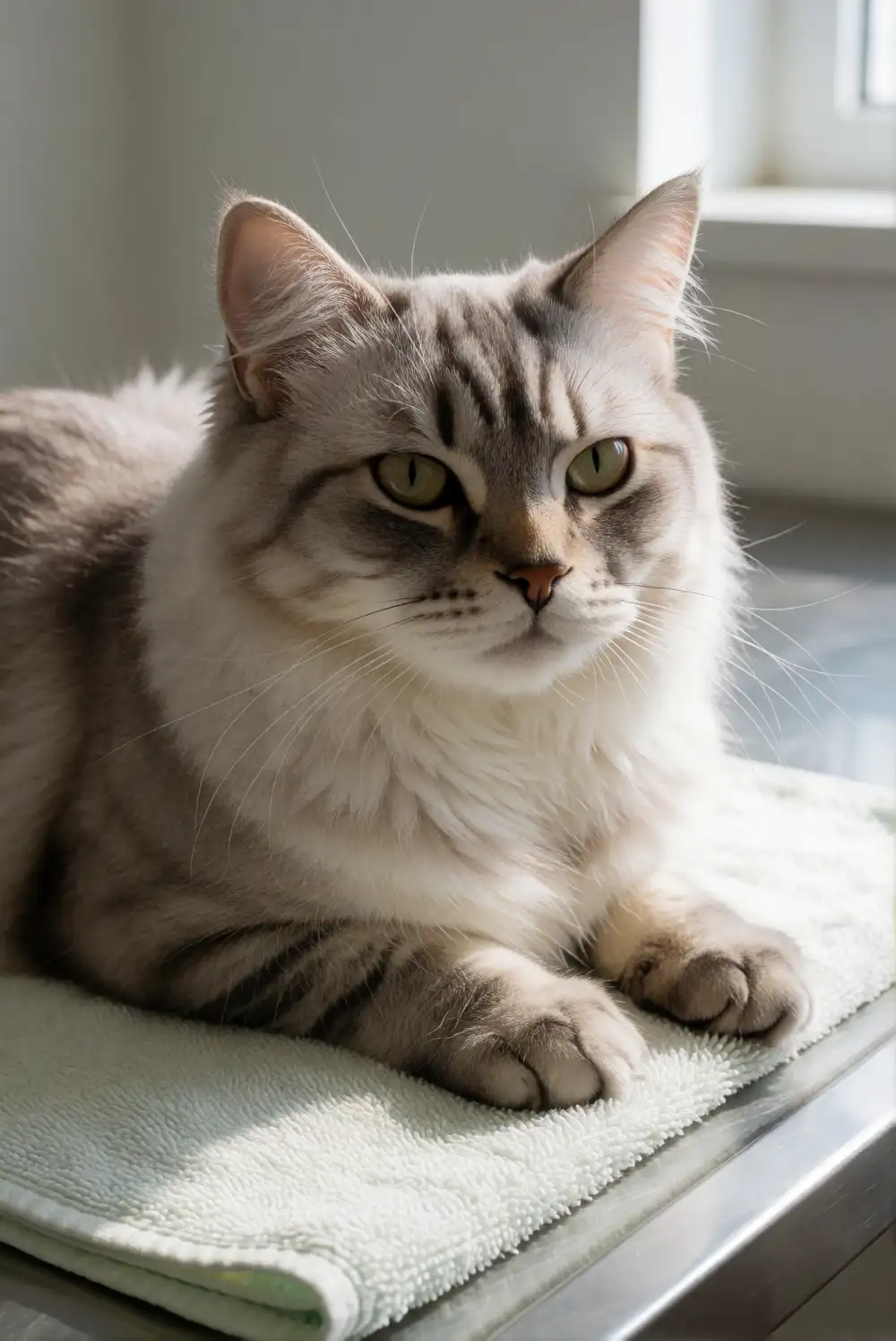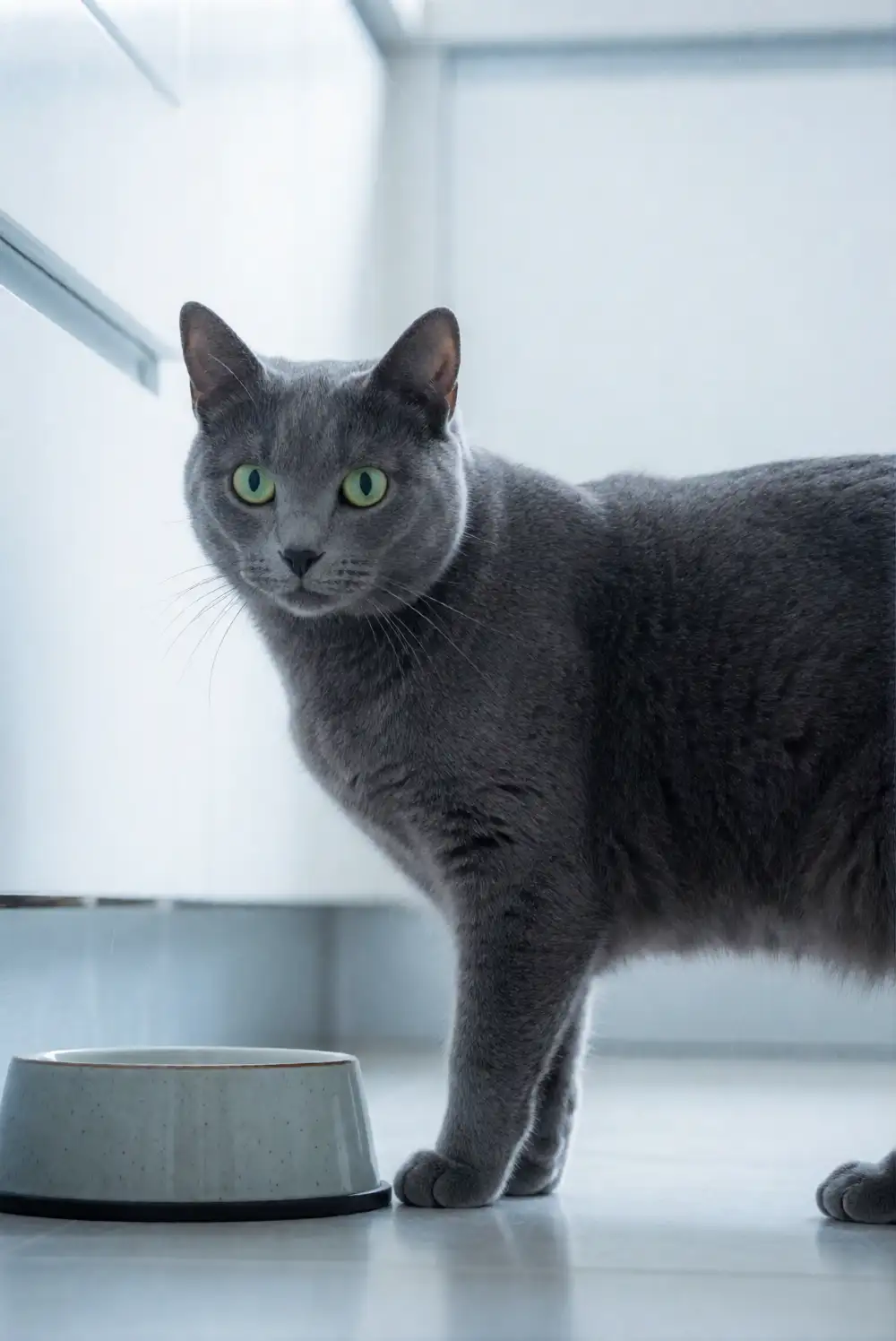
A Russian Blue’s plush double coat can make a lean cat look heavier than it is, so the scale alone won’t tell you whether your cat is at a healthy weight. Check your cat’s body shape and feel for its ribs, then use your veterinarian’s guidance to set a weight goal that fits its frame and life stage.
What Is a Healthy Weight for a Russian Blue?
Many adult Russian Blues weigh about 7 to 12 pounds, or 3.2 to 5.4 kilograms. Individual cats may fall outside that range and still be healthy: sex, height, bone structure, age, and muscle mass all affect an appropriate weight. The breed is medium-sized and fine-boned, with a firm, muscular body beneath its dense blue-gray coat.
Use the range as a rough reference, not a target every Russian Blue should reach. Because the coat is thick and stands away from the body, appearance can be misleading. Kittens also need to be assessed according to their growth and age, not an adult weight chart. If you’re browsing kittens or breeders on CatHatch, ask about the kitten’s age, growth history, and veterinary records.
How to Check Your Russian Blue’s Body Condition
Veterinary teams commonly use a nine-point body condition score, or BCS. A score of 4 to 5 out of 9 is generally considered ideal for many cats. At that score, you should be able to feel the ribs under a light layer of fat without pressing hard, see a waist behind the ribs from above, and notice a slight abdominal tuck from the side.
Run your hands gently along your cat’s sides rather than judging by its silhouette alone. A Russian Blue’s thick coat may hide the waist, while a primordial pouch—a loose flap of skin under the belly—can be normal and does not by itself mean a cat is overweight. Ask your veterinarian to demonstrate body-condition scoring so you can repeat the check consistently at home.
Signs Your Russian Blue May Be Overweight
Possible signs include ribs that are difficult to feel, little or no visible waist, and a rounded outline when viewed from above. Your cat may also become less eager to jump, play, or climb, though reduced activity can have many causes. A number on the scale matters most when compared with your cat’s previous measurements and body condition.
Extra weight can contribute to health problems, including joint strain and diabetes. Don’t put your cat on a crash diet or sharply reduce meals without veterinary advice. A veterinarian can confirm whether fat, rather than a naturally loose belly or thick coat, is affecting the body shape and can recommend a safe rate of loss.
Signs Your Russian Blue May Be Underweight
Ribs, spine, or hip bones that are prominent or easy to see may signal that your cat is too thin. Other clues can include a pronounced waist, loss of muscle over the back or hind legs, a dull coat, or a drop in appetite. A naturally slender build is different from unexplained weight loss, so compare your cat with its own usual shape and weight.
Contact a veterinarian if weight loss is sudden, continues despite normal feeding, or comes with vomiting, diarrhea, increased thirst, changes in urination, or low energy. Dental pain, digestive disorders, parasites, and other illnesses can affect weight. Don’t assume an older Russian Blue is simply getting thinner because of age; a change deserves an evaluation.
Feeding and Activity for a Healthy Russian Blue
Feed a complete and balanced cat food appropriate for your Russian Blue’s life stage, and measure portions rather than estimating by eye. Feeding directions on packages are starting points; your cat’s needs vary with age, neuter status, activity, health, and body condition. Count treats as part of the day’s food, and keep fresh water available. Your veterinarian can help estimate an appropriate daily calorie intake and adjust it as your cat’s weight changes.
Russian Blues are often observant and playful, but individual activity levels differ. Offer short, regular play sessions with wand toys, puzzle feeders, or climbing opportunities suited to your home. Weigh your cat periodically on the same scale if possible, and record the results so gradual changes are easier to spot. Avoid drastic food changes; if a new diet is recommended, ask how to transition safely.
When to Ask a Veterinarian About Weight
Book a checkup if you’re unsure whether your Russian Blue is overweight or underweight, if its weight changes without explanation, or if you’re considering a weight-loss plan. Your veterinarian can assess body condition, muscle mass, and health history—not just compare the scale reading with a breed range. Regular wellness visits also help establish a useful baseline for your individual cat.
Seek prompt advice for rapid weight loss or gain, a sudden appetite change, or weight concerns paired with other symptoms. If you’re looking for a Russian Blue, CatHatch can help you browse available kittens and breeders; ask breeders about health checks and how they monitor kitten growth.
Frequently Asked Questions
How much should an adult Russian Blue weigh?
Many adult Russian Blues weigh about 7 to 12 pounds, but a healthy weight depends on the individual cat’s frame and body condition. Ask your veterinarian to identify a suitable goal for your cat.
Are Russian Blue cats naturally chubby?
No breed should be assumed to be overweight based on appearance alone. A Russian Blue’s dense double coat can make its body look broader, so feel for the ribs and check body shape.
How can I tell if my Russian Blue is overweight?
Check whether you can feel the ribs with light pressure and see a waist behind them. A veterinarian can score body condition and distinguish excess fat from coat or normal belly skin.
Why is my Russian Blue losing weight?
Unexplained weight loss can have several causes, including illness, dental problems, or difficulty eating. Arrange a veterinary evaluation, especially if the change is rapid or comes with other symptoms.
How often should I weigh my Russian Blue?
Periodic checks can help you notice gradual changes, particularly if your cat is on a weight-management plan. Follow your veterinarian’s recommended schedule and use the same scale when possible.