Finding an ethical Arabian Mau breeder takes extra care because this naturally developed breed is uncommon outside the Arabian Peninsula. A responsible breeder will be transparent about a kitten’s background, health care, and upbringing—and won’t pressure you to buy before you’re ready.
Understand the Arabian Mau and its availability
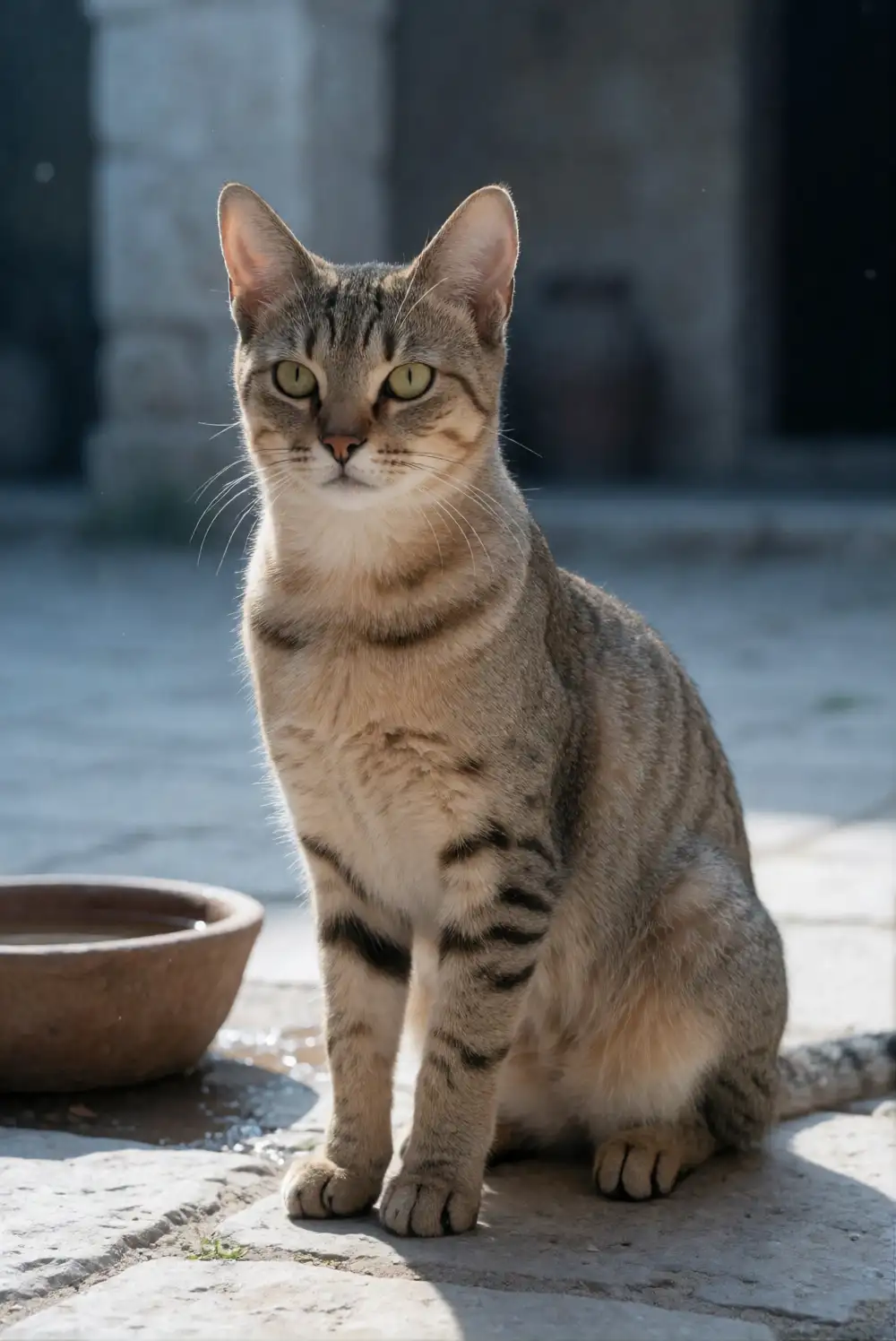
The Arabian Mau is a shorthaired, medium-sized, athletic cat with a wedge-shaped head, prominent ears, and a sturdy, muscular build. It developed naturally in the Arabian Peninsula, where generations of cats adapted to life in a hot, dry climate. Arabian Maus are typically active and curious, but individual temperaments vary; ask how a breeder describes the kitten and its parents rather than relying on breed stereotypes.
Expect to do more research than you would for a widely available breed. Arabian Mau recognition and registration options vary by country and registry, and the breed may be difficult to find in some markets. A seller using the name should be able to explain the cat’s documented lineage and which registry, if any, supports the claim. If a cat resembles an Arabian Mau but has no verifiable pedigree, the seller should describe that honestly rather than presenting appearance as proof of breed. You can also browse CatHatch for available kittens and breeders while comparing your options.
Check the breeder’s identity and records
Ask for the breeder’s full name, location, cattery details, and the registry that issued the kitten’s pedigree. Contact the registry independently to confirm that it is legitimate and ask what its registration means. Request to see the kitten’s pedigree and, when possible, information about both parents. A pedigree documents ancestry; it does not by itself prove that a breeder provides good care or that a kitten is healthy.
A trustworthy breeder answers questions without evasion and asks about your household, experience, and plans for keeping an active cat engaged. They should let you meet the kitten and its mother, in person or by live video, and show where the cats are raised. If travel or import arrangements make an in-person visit impractical, request a live video walkthrough and independently verify documents and references. Breeders should be willing to explain their decisions, not just send polished photos.
Ask about health care without expecting unsupported guarantees
Request veterinary records showing examinations, age-appropriate vaccinations, parasite treatment, and any other care provided. Ask what health issues have occurred in the kitten’s parents or relatives, and what screening the breeder recommends. There is no widely established Arabian Mau-specific genetic-testing panel that can guarantee a kitten will never develop illness. Be cautious if a seller advertises a broad test as proof that the entire breed is disease-free.
Ask whether the kitten has been assessed by a veterinarian and what follow-up care is due. A breeder should explain the kitten’s diet, growth, and any symptoms or treatment honestly. Get copies of records before payment or pickup, and arrange an independent veterinary examination soon after bringing your kitten home. Good health information is specific and documented—not a vague promise that the cat is “100% healthy.”
Evaluate how kittens are raised and matched
Arabian Maus are athletic, alert cats, so ask how kittens get safe opportunities to climb, play, explore, and rest. Their environment should look clean and secure, with access to fresh water, suitable food, litter, and places to retreat. Kittens should appear curious or calmly observant for their age, not persistently fearful, lethargic, or visibly unwell. A breeder should describe how the kitten responds to everyday household sounds and handling.
Ask how the breeder chooses a kitten for your home instead of letting buyers select solely by coat color or by who pays first. Discuss children, other pets, time alone, and the enrichment an active cat will need. Be wary of claims that every Arabian Mau has the same temperament or will automatically adapt to any home. A good match depends on the individual kitten as well as the breed.
Review the price, contract, and handover
There is no dependable universal price for an Arabian Mau: cost can differ substantially with location, documented pedigree, veterinary care, and import expenses. Ask for an itemized explanation of the price and what it includes. An unusually low price paired with urgency may signal a scam or poor conditions; a high price alone is not evidence of ethical breeding. Compare the seller’s documentation and practices, not just the number.
Read the written contract before paying a deposit. It should identify the kitten, spell out payment and health terms, explain any breeding or registration conditions, and state what happens if you can no longer keep the cat. Confirm the kitten’s age and pickup arrangements; responsible breeders generally keep kittens until they are weaned, eating independently, and ready for the transition, often at 12 weeks or older. Get a receipt and copies of all veterinary and registration paperwork.
Red flags that should stop the sale
Walk away if a seller refuses a live conversation, won’t show the kitten’s living conditions, or offers to ship immediately without asking about your home. Other warning signs include several litters always available, no verifiable parent or pedigree information, missing health records, pressure to pay through an irreversible method, and requests for extra fees after a deposit. Stolen photos and copied registration documents are also common online-sale risks, so verify images and contact the registry directly.
Be cautious of sellers who guarantee a particular personality, claim the breed has no health risks, or discourage an independent veterinary check. If something feels inconsistent, pause and verify before sending money. CatHatch can help you browse available kittens and breeders, but use the same careful questions and document checks with every seller.
Frequently Asked Questions
How can I tell if an Arabian Mau breeder is ethical?
Look for transparent records, clean and secure kitten-raising conditions, access to the kitten’s mother, and a contract with clear health and return terms. A responsible breeder welcomes questions and takes time to assess whether the kitten suits your home.
Are Arabian Mau cats rare?
They can be difficult to find in many countries, particularly where the breed has limited recognition or few established breeders. Availability depends on your region, so verify lineage carefully when a seller advertises Arabian Mau kittens.
What health tests should an Arabian Mau breeder provide?
Ask for veterinary examination and vaccination records, information about parasite care, and a candid account of health in the kitten’s family. There is no universally established breed-specific genetic panel that guarantees an Arabian Mau will be free of disease.
How much does an Arabian Mau kitten cost?
Prices vary by location, pedigree documentation, care, and possible travel or import costs, so there is no reliable single price range for every market. Request a breakdown and judge the breeder by verifiable practices rather than price alone.
At what age should an Arabian Mau kitten go home?
Ask when the kitten is fully weaned, eating independently, and ready for a new home; many responsible breeders keep kittens until at least 12 weeks. Local rules and individual circumstances can differ, so confirm the plan and pickup age in writing.