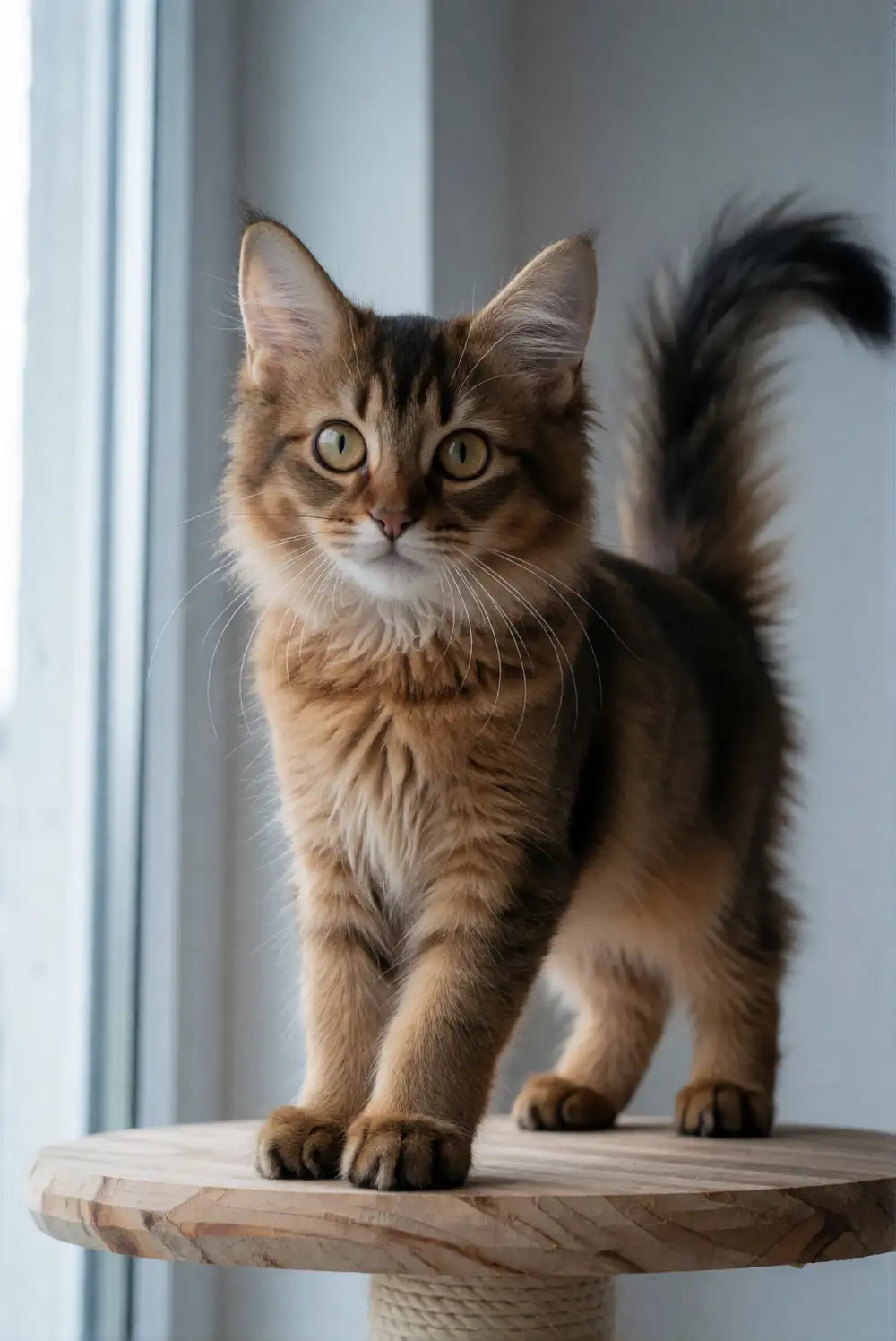
What to Expect as a European Burmese Kitten Grows
European Burmese kittens develop into medium-sized, muscular cats with a sleek outline, a short satin-like coat, and a gently rounded chest. Their wedge-shaped head and expressive eyes—often yellow to amber—give them a distinctive look, but kittens may take time to grow into their adult proportions.
Most European Burmese reach close to their adult size around 12 months, then continue filling out as muscle develops into their second year. Adult weight commonly falls around 6–10 pounds, with individual size shaped by sex, family line, and body condition. Use your kitten’s steady growth and your veterinarian’s assessments rather than comparing them with a single breed-weight chart. If you’re looking for a kitten, you can also browse available kittens and breeders on CatHatch.
European Burmese Kitten Growth Stages: Month by Month
These milestones are a general guide, not a strict schedule. A kitten’s health, early care, and individual pace all affect when each change appears.
- Month 1: Newborn kittens rely on their mother for warmth, milk, and care. Their eyes and ears open gradually, and they begin responding to movement and sound.
- Month 2: Kittens become more mobile and curious, start exploring solid kitten food, and learn important social skills from their mother and littermates. They should stay with their litter until at least eight weeks; responsible breeders often keep them longer.
- Month 3: After settling into a new home, a kitten may become more playful and confident. This is a good time to build gentle routines for handling, play, grooming, and carrier comfort.
- Month 4: Coordination improves, and energetic bursts of chasing and climbing are common. Baby teeth may begin giving way to adult teeth, so offer safe toys rather than hands for chewing.
- Month 5: Your kitten is still growing quickly and needs complete kitten food. Keep play sessions short and varied, with time to rest between them.
- Month 6: Many kittens approach sexual maturity around this age, though timing varies. Discuss spaying or neutering with your veterinarian before your kitten reaches this stage.
- Month 7: Growth continues, but the rate may start to ease. A European Burmese may look long and lean before its characteristic muscular build fills in.
- Month 8: Adult teeth are usually in place, and the kitten’s activity and appetite may fluctuate. Keep meals measured and monitor body condition rather than assuming every increase in appetite means more food is needed.
- Month 9: Your kitten is increasingly coordinated and may show a more settled personality. Continue daily interactive play and reward calm handling.
- Month 10: Most kittens are nearing adult height, though weight and muscle can continue changing. Ask your veterinarian to check the growth trend at routine visits.
- Month 11: The sleek adult coat and body outline may be more apparent, but the cat is not necessarily fully mature. Keep a consistent feeding routine.
- Month 12: Many European Burmese are near adult size, but some continue to gain muscle into the second year. Your veterinarian can advise when to transition from kitten food to an adult diet.
Feeding and Monitoring Healthy Growth
Feed a complete and balanced food labeled for kittens, following its portion guidance as a starting point. Divide the daily amount into meals that suit your kitten’s age and routine, and keep fresh water available. Your veterinarian can adjust portions for growth, activity, and body condition; avoid adding supplements unless they recommend them.
Weigh your kitten regularly on the same scale and note the results. A gradual upward trend is more useful than a single number. European Burmese are naturally muscular, but you should still be able to feel the ribs under a light layer of padding and see a waist from above. If your kitten is gaining too quickly or not growing as expected, ask your veterinarian to review the diet and health history.
Health and Development Checks
Schedule routine veterinary visits for examinations, vaccines, parasite prevention, and advice on dental care and sterilization. Kittens also benefit from gentle daily handling and safe exposure to normal household sounds. A European Burmese’s short coat usually needs little grooming, but brief brushing helps your kitten become comfortable with being handled.
Some Burmese-family lines can carry inherited conditions, including hypokalemia and GM2 gangliosidosis. Ask the breeder which health tests have been performed on the parents and whether testing is relevant to your kitten’s lineage. Contact a veterinarian promptly for poor appetite, persistent vomiting or diarrhea, unusual lethargy, or difficulty walking; sudden weakness or tremors also need prompt attention.
Frequently Asked Questions
How big will a European Burmese kitten get?
Many adults weigh roughly 6–10 pounds, although size varies by sex and family line. Their medium, muscular build can continue filling out after they reach their adult height.
When is a European Burmese fully grown?
Most are close to adult size at about 12 months. Some continue developing muscle and filling out until around 18–24 months.
How much should I feed my European Burmese kitten?
Start with the portion guidance for a complete kitten food and adjust with your veterinarian based on growth and body condition. Needs vary by age, activity, and the food’s calorie content.
When should I switch my European Burmese kitten to adult food?
Many cats transition at about 12 months, but the right timing depends on your kitten’s development and diet. Ask your veterinarian, and make any change gradually to reduce stomach upset.
Is it normal for my European Burmese kitten to look lanky?
Yes. A growing kitten may look lean before developing the breed’s muscular adult build. If weight gain stalls or your kitten seems unwell, arrange a veterinary check rather than waiting for them to fill out.