How Sphynx Kittens Grow
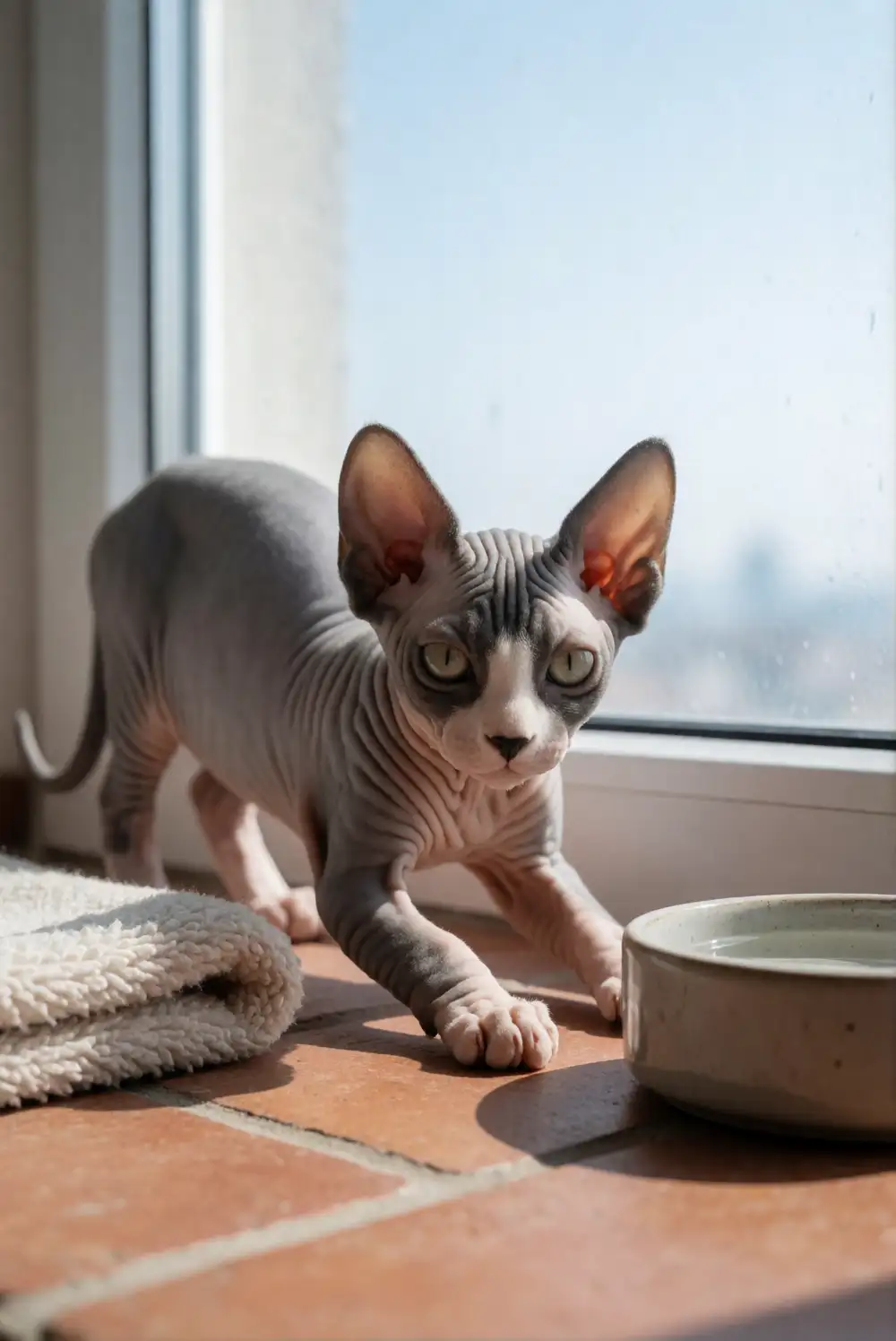
Sphynx kittens grow into medium-sized, muscular cats, but their bare skin can make each change in body shape especially noticeable. They may look lanky during growth spurts before filling out, and many continue developing muscle and body mass until about 12 to 18 months. Adult size varies; females are often smaller than males, and parents’ size can offer a helpful clue.
These milestones are general guides, not a strict schedule. A kitten’s health, genetics, and nutrition all affect development, so track steady growth with your veterinarian rather than comparing your Sphynx with a chart alone. If you are looking for a kitten, CatHatch can help you browse available kittens and breeders.
Newborn to 3 Months: Early Development
Newborn: Sphynx kittens are tiny, with closed eyes and folded ears. They depend on their mother for warmth, nursing, and help eliminating waste. Month 1: Eyes open, ears begin to unfold, and kittens start standing and exploring. They still need frequent nursing and a warm, safe nest. Month 2: Play, coordination, and curiosity increase. Weaning usually begins gradually, with kitten food introduced while nursing continues. Month 3: Kittens are more active and social, and they generally eat solid kitten food. They should have had veterinary care, age-appropriate vaccines, and regular weight checks. Responsible breeders commonly keep kittens until at least 12 weeks so they can continue learning from their mother and littermates.
Months 4 to 6: Fast Growth and Confidence
Month 4: Longer legs and a lean, angular outline may make your kitten look temporarily out of proportion. Playful chasing and climbing help build coordination. Month 5: Appetite and energy can remain high as bones and muscles develop. Keep feeding a complete kitten diet rather than switching to adult food because your kitten looks nearly grown. Month 6: Many Sphynx kittens are approaching sexual maturity, though timing varies. Discuss spaying or neutering with your veterinarian, and keep your kitten indoors or securely contained until they are altered and protected from outdoor risks.
Months 7 to 12: Filling Out
Month 7: Growth may become less dramatic, but your kitten still needs kitten-formulated nutrition. Month 8: Your Sphynx may look more proportionate as the torso and muscles catch up with the legs. Month 9: Activity and appetite can fluctuate; use body condition and veterinary guidance, not appetite alone, to judge portions. Month 10: Some kittens approach adult height, while others continue growing. Month 11: Muscle tone and adult features become more apparent. Month 12: Your cat may look close to adult size, but many Sphynx cats keep filling out for several more months. Your veterinarian can advise when to transition gradually to adult food.
Feeding and Keeping a Growing Sphynx Warm
Feed a nutritionally complete food labeled for kitten growth, following its portion guidance and adjusting with your veterinarian as your kitten gains weight. Kittens have small stomachs, so several meals a day are often practical; provide fresh water at all times. Avoid using supplements or high-calorie foods to speed growth unless a veterinarian recommends them. A healthy Sphynx should gain steadily and maintain a trim shape, not develop a round belly from overfeeding.
Without a fur coat, Sphynx kittens can lose body heat more readily than coated kittens. Keep their sleeping area comfortably warm and away from drafts, and offer soft, washable bedding. Clothing is optional and should fit comfortably without rubbing or restricting movement. Check skin regularly for irritation, and never use a heating pad or hot surface that could burn delicate skin.
Health Checks and When to Call the Vet
Schedule routine kitten visits for weight monitoring, vaccines, parasite prevention, and advice on dental care and neutering. Sphynx cats can be prone to heart disease, including hypertrophic cardiomyopathy, so ask the breeder about cardiac screening in the kitten’s family and ask your veterinarian what monitoring is appropriate. Seek veterinary advice promptly if your kitten stops eating, has repeated vomiting or diarrhea, seems unusually weak, has trouble breathing, or is not gaining weight. Sudden changes matter more than small differences from a typical growth timeline.
Frequently Asked Questions
When do Sphynx kittens stop growing?
Many are close to adult size around 12 months, but some continue gaining muscle and filling out until 18 months. Growth varies by individual and family line.
How much should a Sphynx kitten weigh each month?
There is no single reliable monthly weight for every Sphynx kitten. Ask your veterinarian to track your kitten’s growth over time and assess body condition alongside weight.
Do Sphynx kittens need special food?
They need a complete, balanced diet formulated for kitten growth, as do other kittens. Your veterinarian can help choose portions and determine when to transition to adult food.
Are Sphynx kittens colder than other kittens?
They can lose heat more readily because they lack a fur coat. Provide a warm, draft-free resting place, and make sure any clothing is comfortable and does not irritate their skin.
When should a Sphynx kitten visit the vet?
Arrange a veterinary exam soon after bringing your kitten home, then follow the schedule recommended for vaccines, parasite prevention, and growth checks. Contact the clinic sooner for concerning symptoms or poor weight gain.