Who This Guide Is For
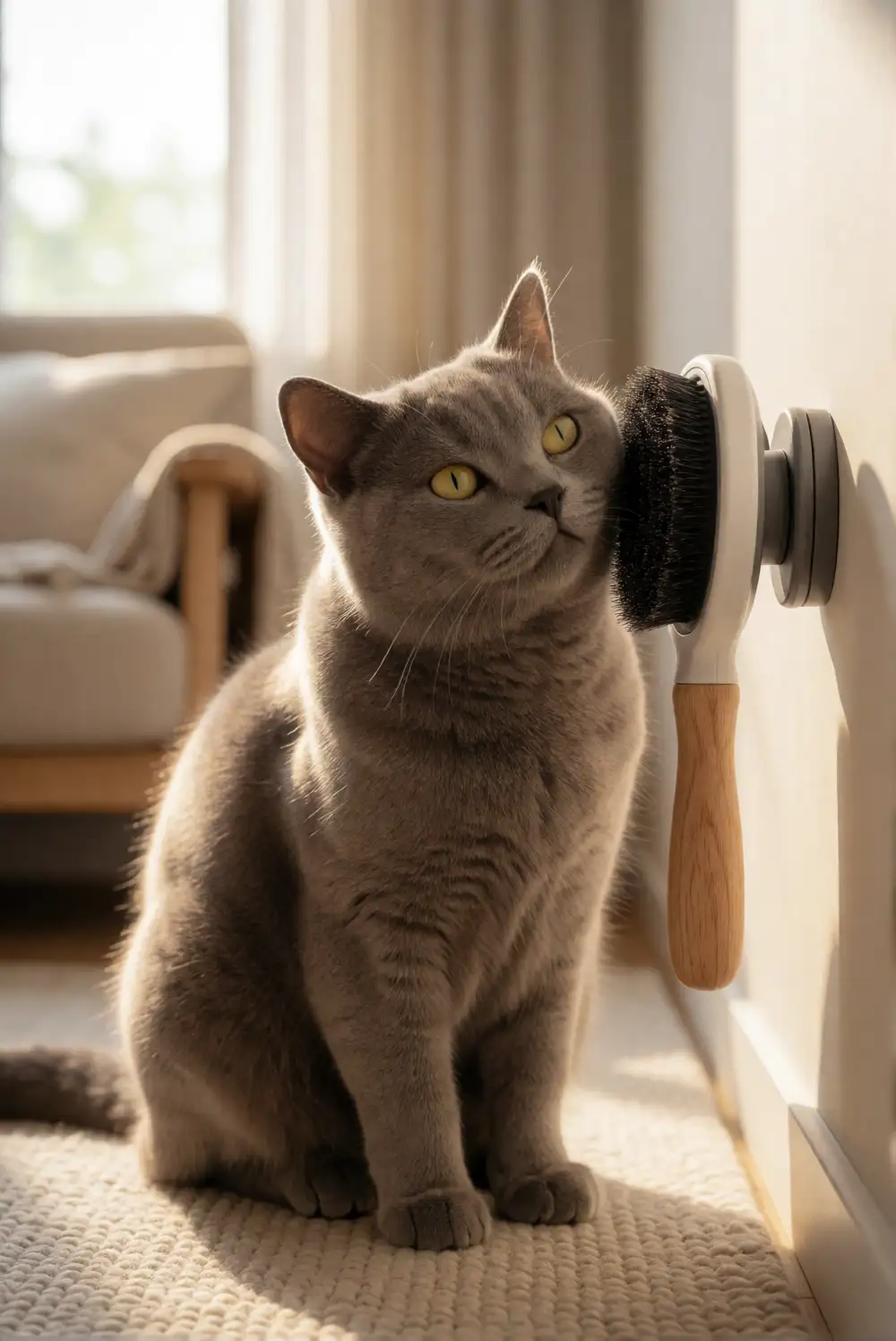
Choose a brush that feels comfortable on your cat’s skin and suits their coat, rather than assuming every short-haired cat needs the same tool. This guide is for cat owners comparing everyday brushes for shedding, loose fur, and gentle grooming.
Short coats vary: some cats have sleek, close-lying fur, while others have a dense undercoat. A kitten, senior cat, or cat who dislikes handling may also need shorter, gentler sessions. If you have concerns about your cat’s skin or coat, ask a veterinarian.
Features to Compare
Look at bristle material, tip shape, flexibility, and how easily the brush can be cleaned. A comfortable handle and a brush head that fits your cat’s body can make grooming easier to control.
- Coat match: Sleek coats may need only a soft surface to lift loose hair; denser coats can benefit from a tool that reaches through the topcoat gently.
- Skin comfort: Prefer smooth, rounded, or flexible contact points, especially if your cat is sensitive.
- Handling: A compact brush can be easier to guide around the face and legs, while a larger one can cover the back efficiently.
- Cleanup: Check whether collected fur can be removed without tugging or pulling at the brush.
Rubber Curry Brushes
Flexible rubber nubs massage the coat surface and gather loose hair, making this style a practical option for many cats who enjoy gentle touch. Compare rubber curry brushes for cats if you want a flexible tool for short grooming sessions.
Trade-off: The nubs may not reach deeply into a dense coat, and some cats dislike the sensation. Use light pressure and stop if your cat moves away or seems uncomfortable.
Soft-Bristle Brushes
Soft bristles can smooth sleek coats and pick up surface dust or loose hairs. They suit cats who tolerate a light brushing sensation and owners who want a simple, gentle grooming tool. See soft-bristle cat brushes when comparing options for a close-lying coat.
Trade-off: Soft bristles may collect less loose fur from cats with a thick undercoat. They are not a substitute for a tool that can gently work through denser fur.
Grooming Gloves
A grooming glove lets you stroke your cat while its textured palm collects some loose hair. It may suit cats who resist brushes but enjoy being petted, and it can make it easier to groom broad areas without a rigid brush head. Compare grooming gloves for short-haired cats for a hands-on option.
Trade-off: Gloves offer less precision around small areas and may not gather as much fur as a brush. Make sure the glove fits your hand securely so it does not slip during grooming.
Gentle Slicker Brushes
A small slicker brush with flexible, rounded pins can help lift loose hairs from a denser short coat. This style may suit cats with a noticeable undercoat, provided the pins are gentle and you use very light strokes. Look at soft-pin slicker brushes for cats when comparing gentle designs.
Trade-off: Pins can irritate skin if pressed hard or used repeatedly over one spot. Avoid stiff, sharp pins, and do not assume a slicker is needed for every short coat.
Fine-Tooth Grooming Combs
A fine-tooth grooming comb can help check for loose hairs and gently tidy small areas, such as around the cheeks or behind the ears. Compare fine-tooth grooming combs for cats if you want a precise tool for brief, careful sessions.
Trade-off: A comb can catch or pull if moved through tangles. Work in small sections, keep the teeth away from eyes and whiskers, and never force it through resistant fur.
Sizing and Fit
Choose a brush head that is easy to control on your cat. A small head helps you work around the face, legs, and other narrow areas; a wider head can cover the back more quickly. The handle should feel secure without requiring a tight grip.
Let your cat’s coat guide the choice: sleek, close-lying fur often needs a gentler surface-level tool, while a dense coat may need a brush that reaches a little deeper without scraping the skin. For kittens, older cats, or cats with tender skin, use especially light pressure and brief sessions.
Safety Checks Before Grooming
- Check the brush for broken, bent, sharp, or rough parts before each session.
- Start with a few gentle strokes in the direction the coat lies, and watch your cat’s response.
- Avoid pressing hard, brushing the same patch repeatedly, or pulling at knots.
- Keep tools away from eyes, ears, whiskers, and any area your cat does not want touched.
- Stop if your cat shows discomfort, tries to leave, or becomes distressed. Ask a veterinarian about skin or coat concerns.
Common Buying Mistakes
- Choosing by coat length alone: Short-haired cats can still have different coat densities and grooming preferences.
- Assuming more pins mean better grooming: A brush that feels harsh can make grooming unpleasant.
- Buying an oversized tool: A large head can be awkward around small or sensitive areas.
- Expecting one brush to do everything: A surface-level brush may not suit every coat or grooming task.
- Ignoring your cat’s reaction: Comfort and cooperation matter more than a complicated grooming routine.
Quick Choice Summary
For a cat who enjoys gentle massage, consider a flexible rubber curry brush. For a sleek coat and light grooming, consider soft bristles. If your cat prefers petting, a glove may feel more familiar. A gentle slicker may suit a denser short coat, while a fine-tooth comb can help with careful, targeted grooming.
Whichever type you choose, prioritize a comfortable feel, controlled strokes, and your cat’s willingness to participate. If grooming seems painful or you notice a coat or skin concern, check with a veterinarian.
Frequently Asked Questions
How often should I brush a short-haired cat?
It depends on your cat’s coat and tolerance. Start with short sessions and adjust based on loose fur and how comfortably your cat responds.
Do all short-haired cats need a slicker brush?
No. A slicker may suit some denser coats, but many short-haired cats do well with a softer, surface-level tool. Choose based on coat and comfort.
Can I use a grooming glove if my cat dislikes brushes?
A glove may suit a cat who enjoys being stroked, but introduce it gradually and stop if your cat objects. It may not collect as much fur as a brush.
How can I tell if a brush is too rough?
Use very light pressure and observe your cat. Pulling away, agitation, or discomfort are signs to stop and try a gentler approach or another tool.
What should I do if I notice a skin or coat problem?
Pause grooming around the affected area and ask a veterinarian for guidance rather than trying to address a health concern with a brush.