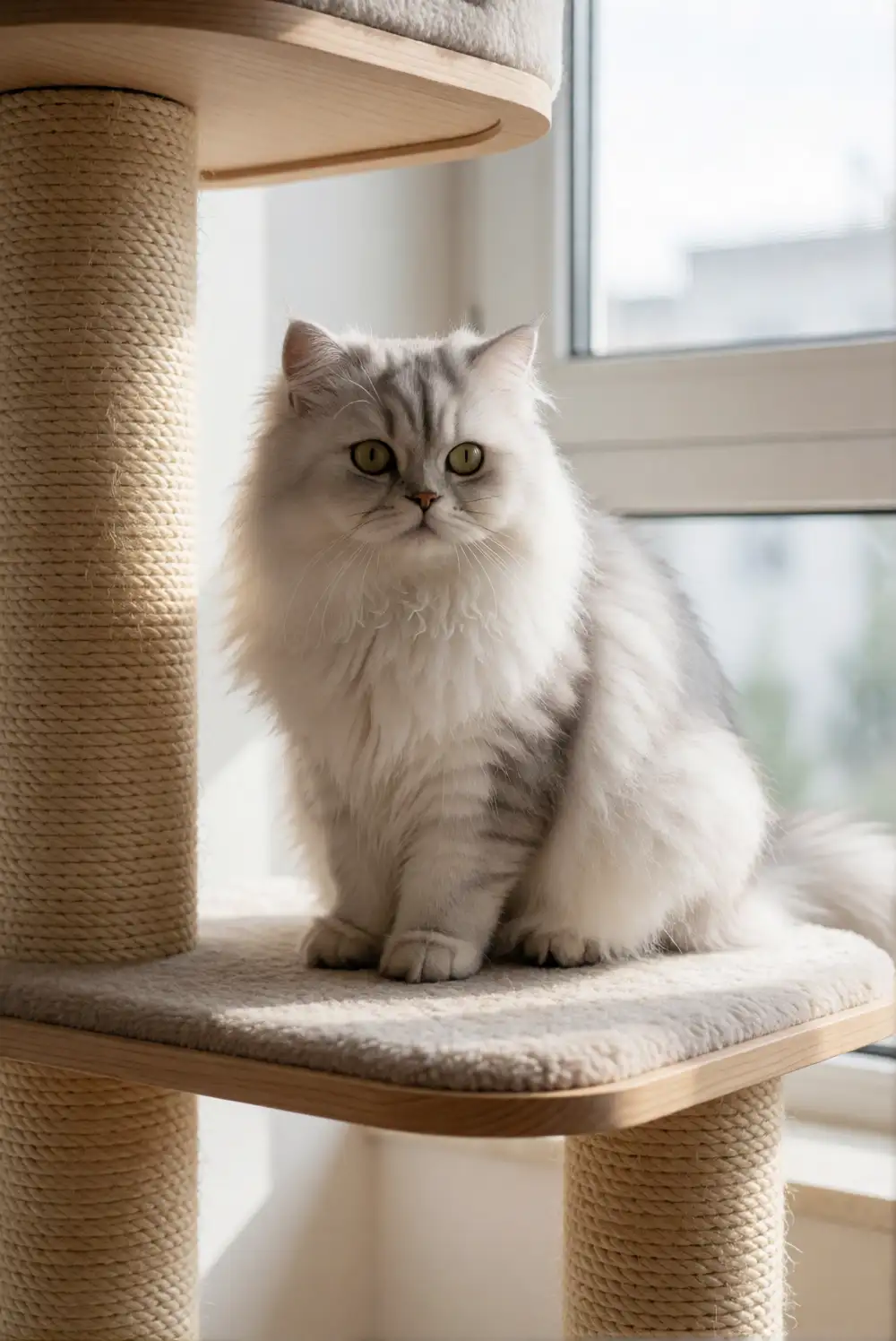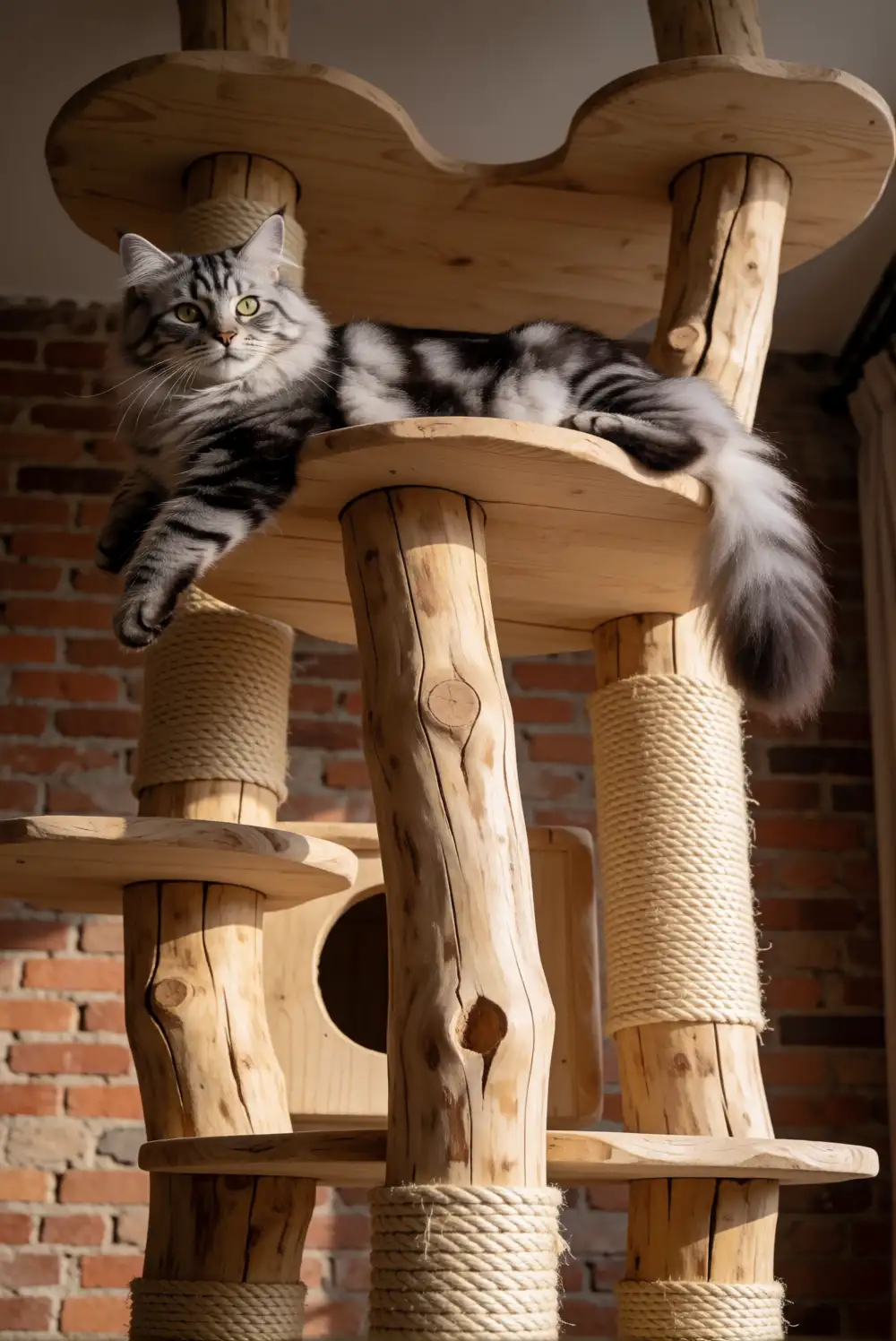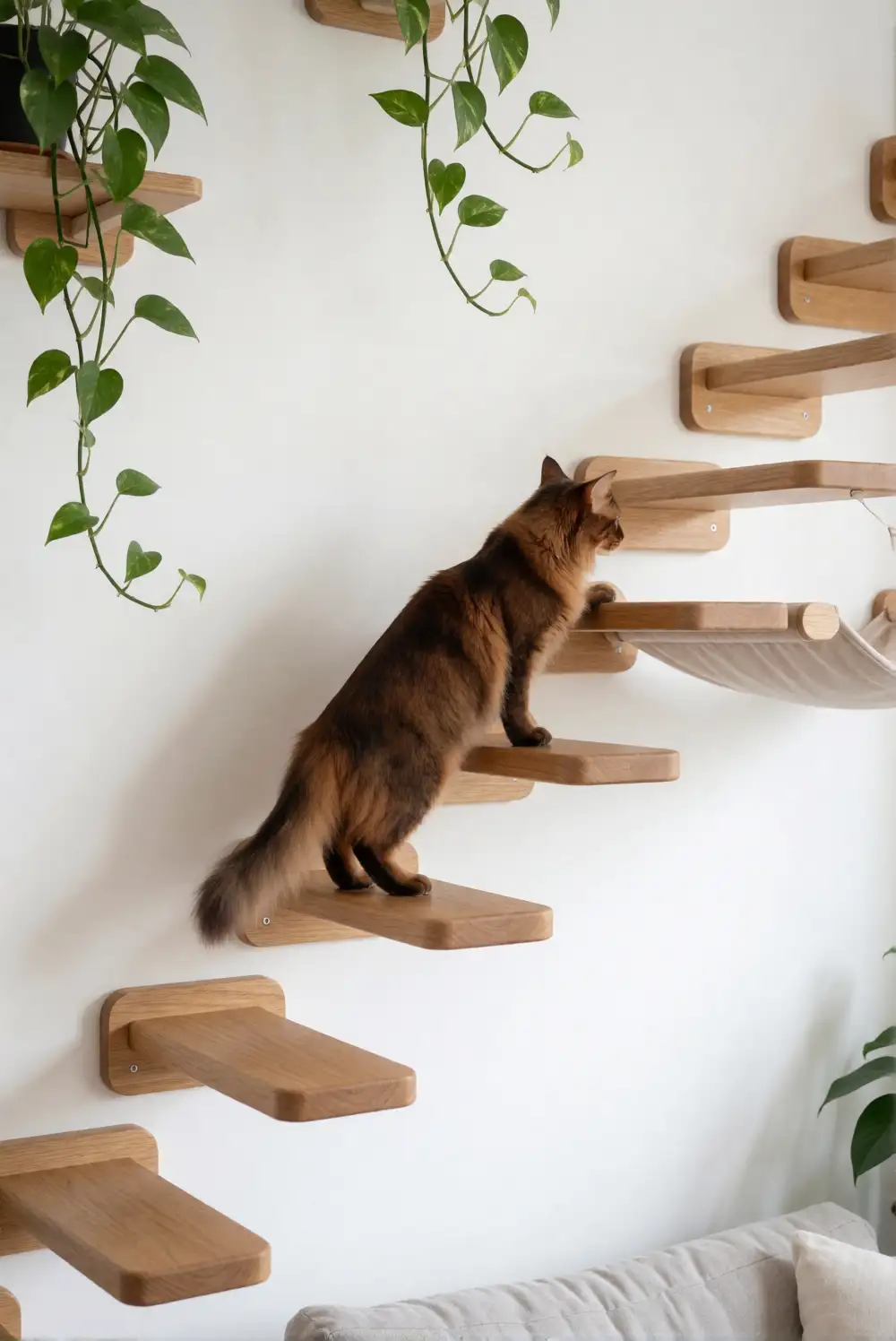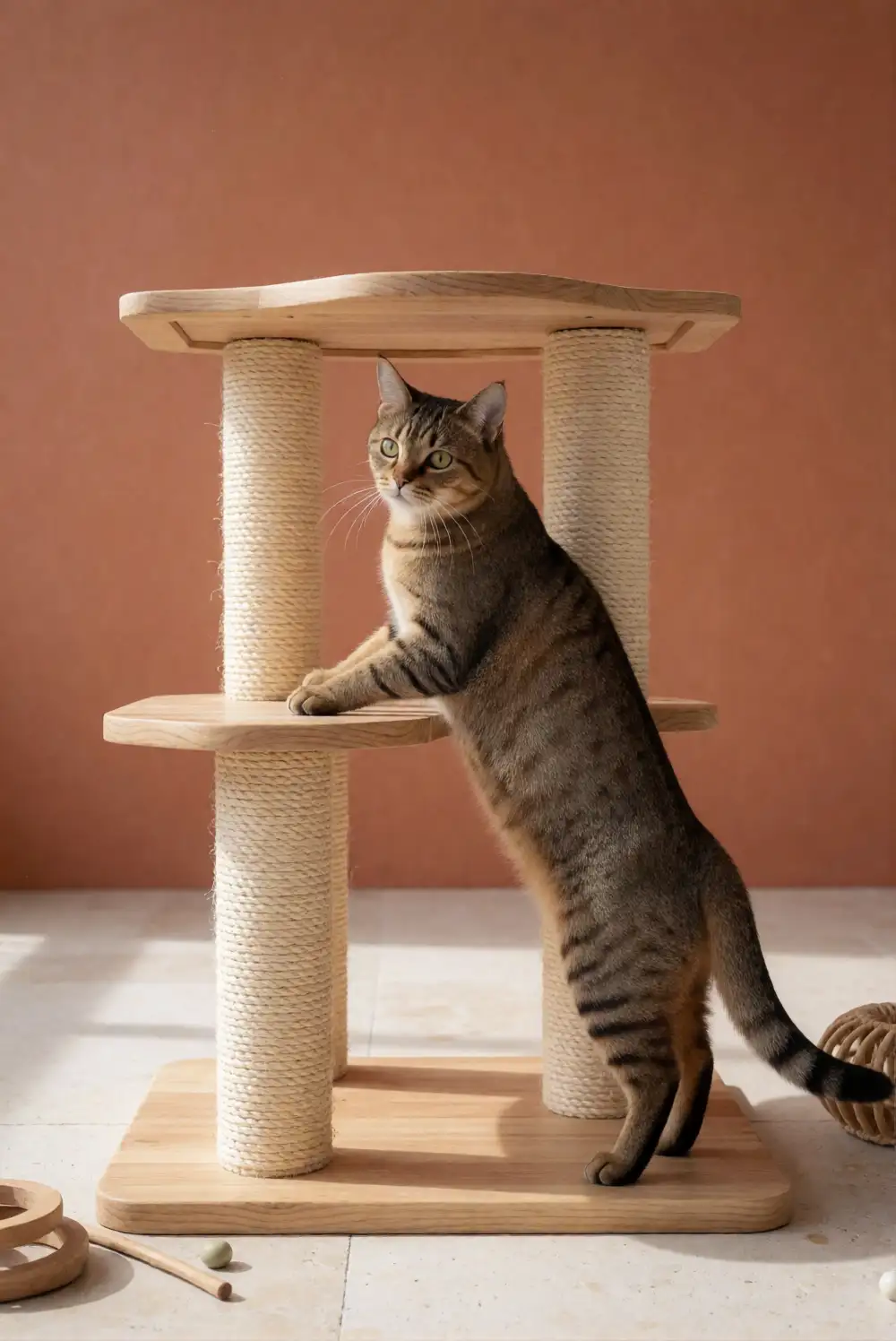
Arabian Maus are muscular, athletic cats that love to climb, perch, and survey their surroundings. The best cat trees and furniture for an Arabian Mau combine generous platforms with a broad, stable base, so energetic jumps don’t make the structure wobble or tip.
Why Arabian Maus Need Sturdy Cat Furniture
Arabian Maus are medium-to-large, strong-bodied cats with short coats and a natural fondness for movement. Individual weights vary, so use your cat’s current weight—and the possibility of adult growth for a kitten—as your guide rather than relying on a breed average. Their athletic leaps can also put more force on a platform than simply resting there.
Look for furniture with a clearly stated weight capacity that comfortably exceeds your cat’s weight. If you have two cats likely to share a perch, account for their combined weight. A tall tree that looks substantial may still be unstable if it has a narrow base, lightweight construction, or small platforms that make landing awkward.
Choose the Right Weight Capacity and Base
Check the manufacturer’s capacity for the whole tree and for individual beds, hammocks, and shelves. A single overall limit doesn’t guarantee that every elevated perch can safely support your Mau. When a product listing does not explain its limits, dimensions, or materials, contact the seller before buying.
A wide, heavy base and a low center of gravity help a tree stay steady when your cat launches upward or lands from a jump. For taller designs, choose one that can be secured to a wall when the manufacturer recommends it. Place the tree on level flooring, tighten every connection during assembly, and check fasteners periodically; a rug should not hide an uneven or rocking base.
Prioritize Roomy Platforms and Easy Climbing
Arabian Maus need enough space to turn around, stretch, and settle without hanging over an edge. Compare the usable platform surface with your cat’s body length while curled up and while resting on their side. A raised rim can provide a comfortable brace, but it should not take up so much space that the actual sleeping area becomes cramped.
Choose a layout with broad steps or closely spaced levels instead of requiring one long leap to reach the top. This suits energetic climbers while giving kittens, older cats, or cats recovering from an injury a safer route. A large top perch is useful for a favorite lookout, but your Mau should be able to reach it without relying on a narrow, unstable post.
Pick Durable Materials and Useful Features
Sturdy wood or thick engineered panels can provide a solid frame; check that joints and connectors feel secure rather than relying on appearance alone. Sisal-wrapped scratching posts should be tall enough for a full-body stretch and firmly attached so they don’t spin under pressure. Replace a worn or loose component before it becomes a fall or snag hazard.
Consider how your cat actually uses furniture. A stable perch near a window may be more valuable than several small cubbies, while a washable cushion can make a sleeping platform easier to maintain. If your Mau enjoys enclosed spaces, choose an accessible hideaway with enough room to turn around. Skip dangling toys or loose cords if your cat chews or gets tangled in them.
Round Out the Setup with Mau-Friendly Furniture
A cat tree doesn’t have to do everything. A securely mounted wall shelf, low window perch, or sturdy scratching post can add variety, provided each piece is rated for your cat’s weight and installed as directed. Keep routes between surfaces simple and avoid gaps that invite risky jumps. For rental homes or flexible layouts, a stable freestanding perch may be easier than wall-mounted furniture.
Place a scratching surface where your Arabian Mau already likes to stretch or scratch, such as near a resting spot or a well-used walkway. Cat furniture is more likely to get regular use when it fits your cat’s habits and your home’s layout. CatHatch also helps readers browse available kittens and breeders as they plan a cat-ready setup.
Placement, Safety, and Getting Your Cat to Use the Tree
Put the tree on a level surface away from doors, appliance hazards, and furniture that could shift during a leap. A quiet window area can offer enrichment, but secure windows and balcony access; never rely on the tree itself as a barrier. Leave clear space around the structure so your cat can approach and jump down without hitting a shelf or hard corner.
Introduce new furniture without forcing your Mau onto it. Place a familiar blanket on a platform, offer treats nearby, or play with a wand toy around the lower levels. Watch for rocking, frayed sisal, loose fabric, or cracked parts, and stop access until damaged furniture is repaired or replaced. You can browse CatHatch for kittens and breeders while considering the space and equipment your household can provide.
Frequently Asked Questions
How tall should a cat tree be for an Arabian Mau?
There is no breed-specific required height. Choose a height that fits your room and your cat’s climbing habits, with a wide base, stable construction, and easy-to-reach levels.
What weight capacity should a cat tree have?
Choose a tree rated comfortably above your Arabian Mau’s current weight, and check the limit for each individual perch. If multiple cats may share it, account for their combined weight where they might sit together.
Are wall-mounted shelves safe for Arabian Maus?
They can be, if each shelf is rated for your cat’s weight and fastened securely into suitable wall supports according to the manufacturer’s directions. Plan a route with manageable gaps and provide a safe way down.
What is the best scratching post for an Arabian Mau?
Choose a firmly anchored post that stays steady when your cat scratches and is tall enough for a full-body stretch. Sisal is a popular durable surface, but your cat’s preference matters most.