What Persian Cats Need from Cat Furniture
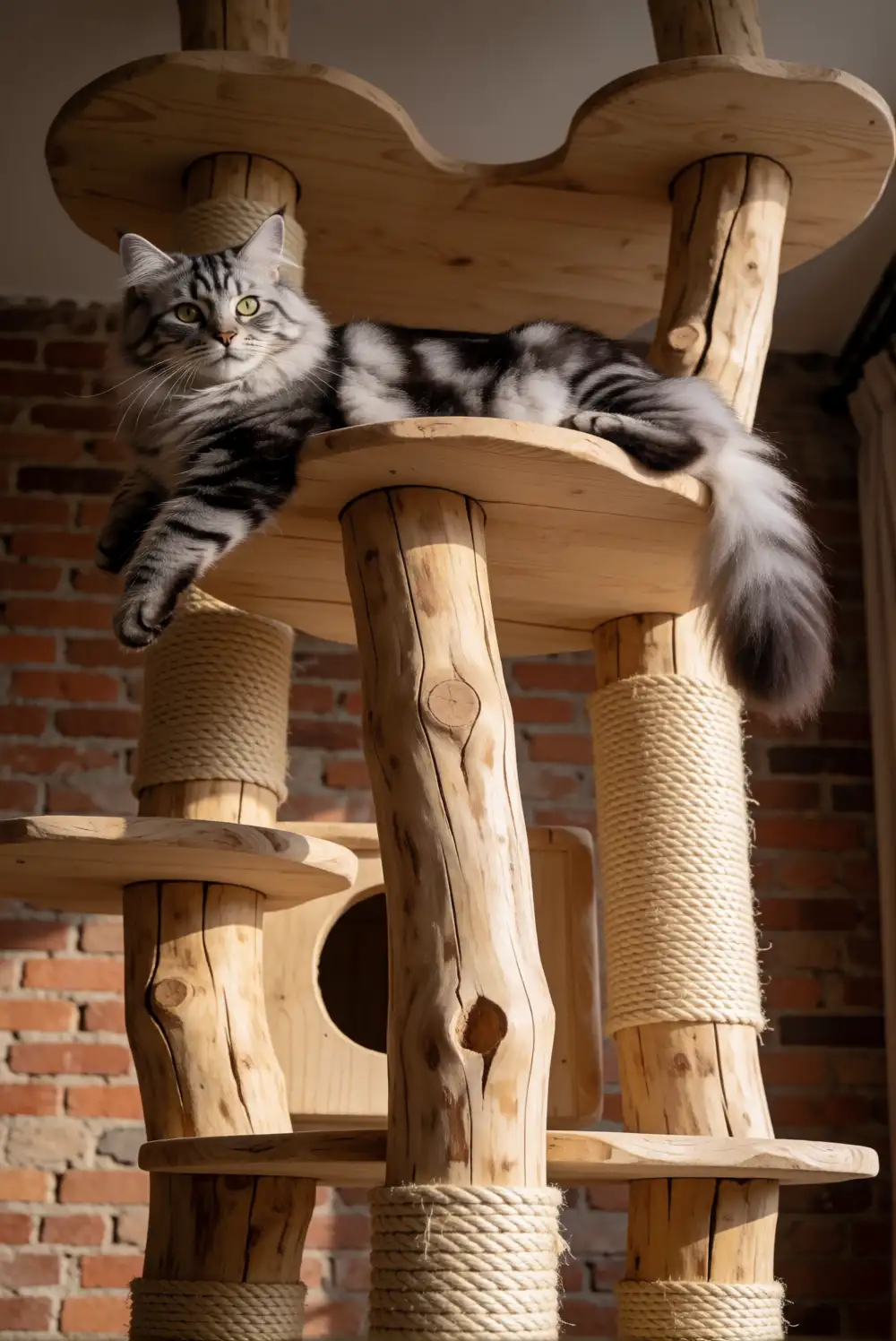
The best cat trees and furniture for Persians have broad resting surfaces, steady construction, and routes that don’t require a leap to the top. Adult Persians commonly weigh about 7 to 12 pounds, though individual cats vary; their stocky, cobby build means a narrow perch may feel cramped even when its weight rating looks sufficient. Choose furniture for your cat’s actual size and movement, not just the number on the scale.
Persians are generally more interested in comfortable lounging than strenuous climbing. Their short legs and flat faces can make repeated high jumps less appealing, especially for senior cats or cats with breathing or joint concerns. A low, stable tree with several easy-to-reach levels often works better than a tall tower with tiny platforms.
Choose a Wide, Stable Cat Tree
Look for a heavy, wide base and a structure that stays still when your cat steps onto an outer edge. As a practical starting point, seek a base around 24 inches square for a taller tree, then compare the manufacturer’s dimensions and weight guidance. A wider base is especially important when platforms extend beyond the central post. If the tree wobbles during a firm hand test, it is unlikely to feel reassuring to a Persian landing on it.
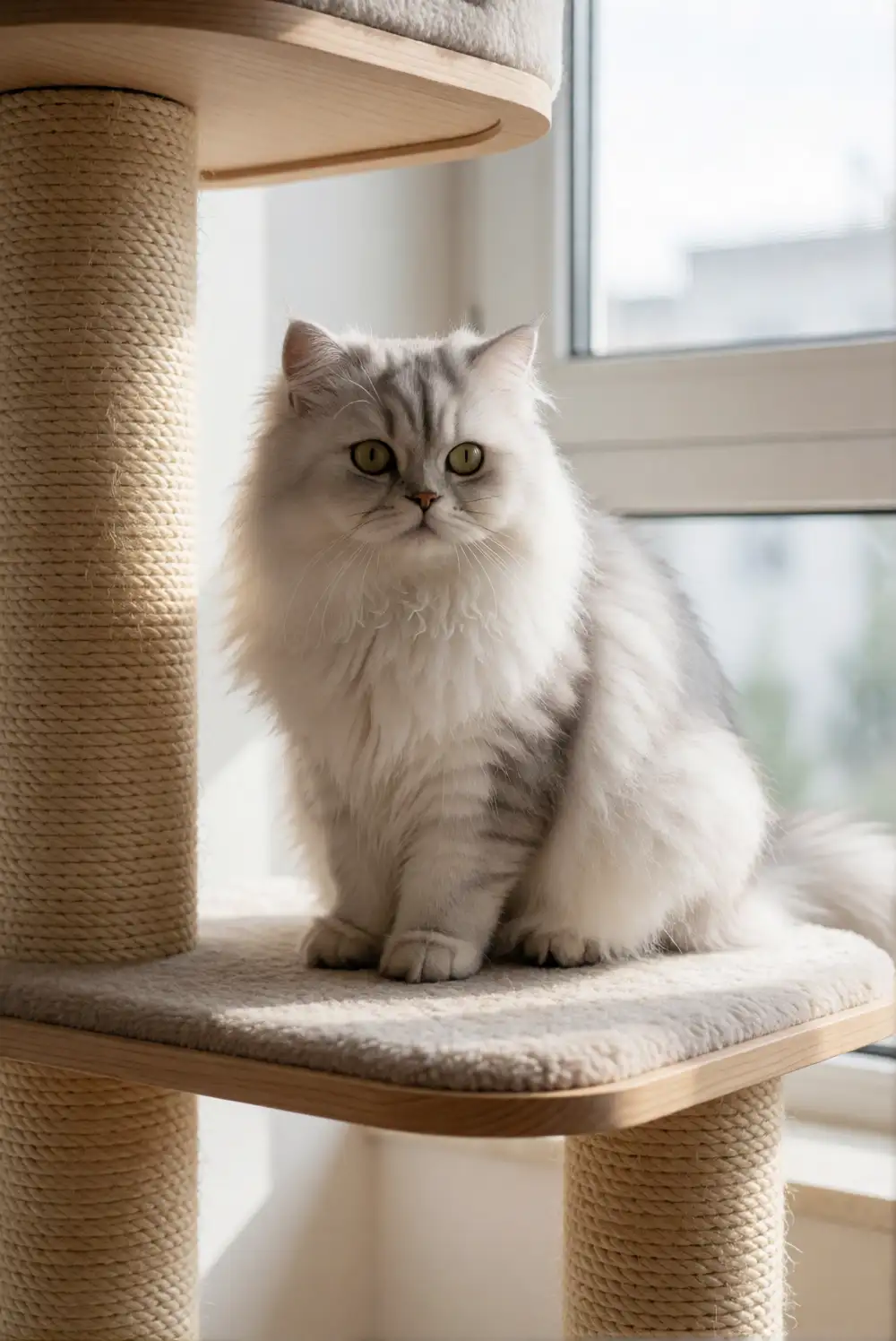
Platform space matters as much as the advertised weight capacity. Aim for resting surfaces roughly 16 to 18 inches across, or large enough for your cat to turn around and lie down without hanging over the edge. Check the usable surface, not just the outside measurement: thick borders, posts, and bolsters can reduce the area your cat can actually occupy. Weight ratings describe a product’s limit, but a cat jumping onto it creates more force than a cat sitting still.
Make Every Level Easy to Reach
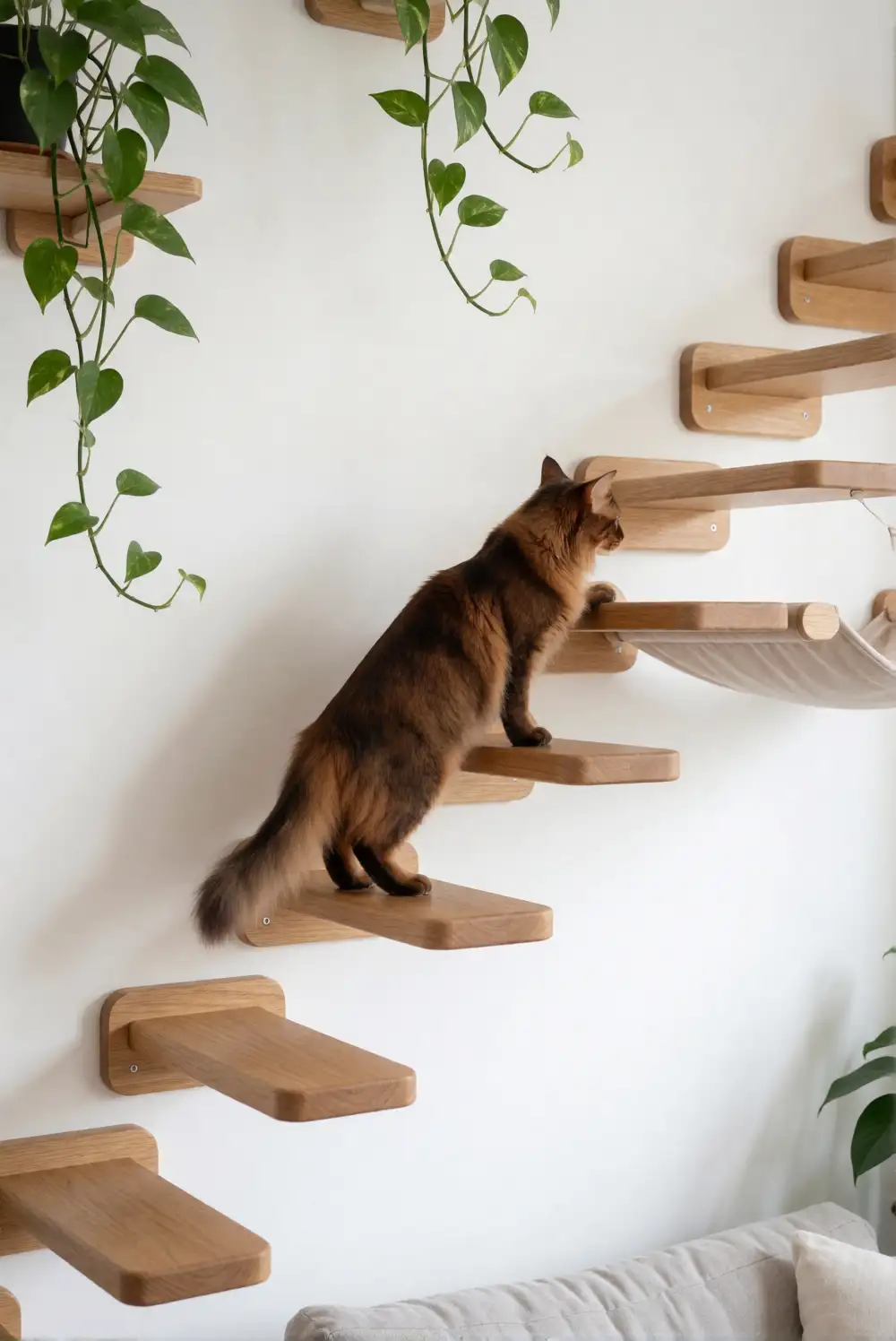
Persian-friendly trees arrange platforms like steps rather than making cats leap between distant levels. Look for short gaps, generous footholds, and a route that lets your cat pause between climbs. A ramp or wide step can help kittens, older cats, and Persians who prefer not to jump. Avoid narrow ladders or steep ramps that shift underfoot; secure the furniture according to its instructions before inviting your cat to use it.
Hammocks and high, small lookout perches can be uncomfortable for a broad-bodied cat, even if the frame supports the weight. If your Persian enjoys a window view, consider a wide shelf or a firmly mounted window perch with a clear weight rating and enough depth to lie down. Keep the landing area unobstructed, and don’t position furniture where a slip could send your cat onto a hard edge.
Pick Persian-Friendly Surfaces and Beds
Choose durable, easy-to-clean materials that won’t trap loose fur in every crevice. Short-pile carpet or tightly woven upholstery is often easier to vacuum than long shag. Long-haired Persians shed and need frequent grooming, so removable cushions or washable covers are useful for managing fur and the occasional hairball. Inspect fabric regularly for loose threads that could catch claws or coat.
A sturdy sisal-wrapped post gives your cat a useful scratching surface; select one tall and solid enough for a comfortable stretch without tipping. For resting, a broad, supportive bed with a washable cover may be more appealing than a cramped enclosed cubby. If your cat loves hideaways, choose one with a roomy entrance and enough interior space for their coat and body to fit without squeezing.
Set Up Furniture for Daily Persian Comfort
Place the tree on a level floor in a calm spot where your Persian already likes to spend time. Keep it away from busy doorways, heaters, and places where another pet could block the route down. On hardwood or tile, a non-slip mat under the base can reduce sliding. For a tall tree, use the supplied wall anchor; anchoring is a sensible safety measure even when the base feels heavy.
Check screws and joints regularly, since normal use can loosen hardware and create wobble. Vacuum platforms, wash removable covers as directed, and replace worn scratching material before the post becomes unstable. Introduce a new tree gradually with familiar bedding or a few treats on the lower platform. CatHatch readers can browse available kittens and breeders when planning for a Persian’s comfort from kittenhood onward, but choose furniture to suit the cat’s adult size.
Frequently Asked Questions
What size cat tree is best for a Persian?
Choose a tree with a broad base, roomy platforms, and short gaps between levels. Platforms around 16 to 18 inches across are a useful starting point, but check your cat’s measurements and the tree’s usable surface.
Can a cat tree support a Persian’s weight?
Many trees can support an average adult Persian, but verify the manufacturer’s weight limit and look for solid construction. A heavy, wide base and secure anchoring matter because jumping puts more force on furniture than resting does.
Do Persians need a low cat tree?
Persians do not all need the same height, but many prefer easy routes and stable places to rest over tall, difficult climbs. A low or medium tree with stepped platforms is a practical choice, especially for seniors or cats with mobility or breathing issues.
Are cat shelves safe for Persian cats?
They can be, provided each shelf is securely mounted, wide enough for your cat to settle on, and connected by manageable steps. Check the hardware and wall type, and avoid high routes with large gaps between landing spots.
What kind of scratching post should I buy for a Persian?
Choose a sturdy post with a stable base and a durable scratching surface such as sisal. It should be tall enough for your cat to stretch comfortably without wobbling when scratched.