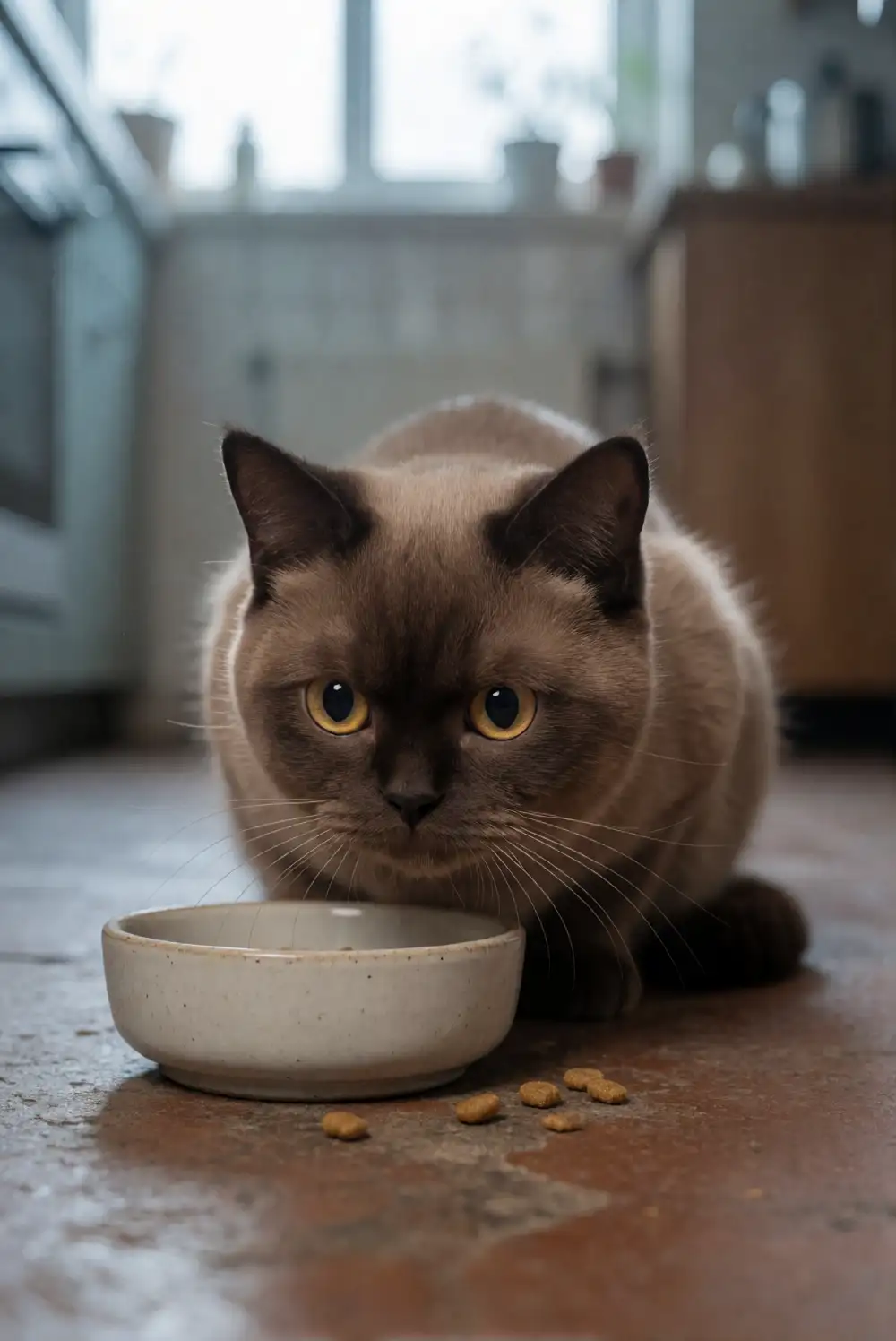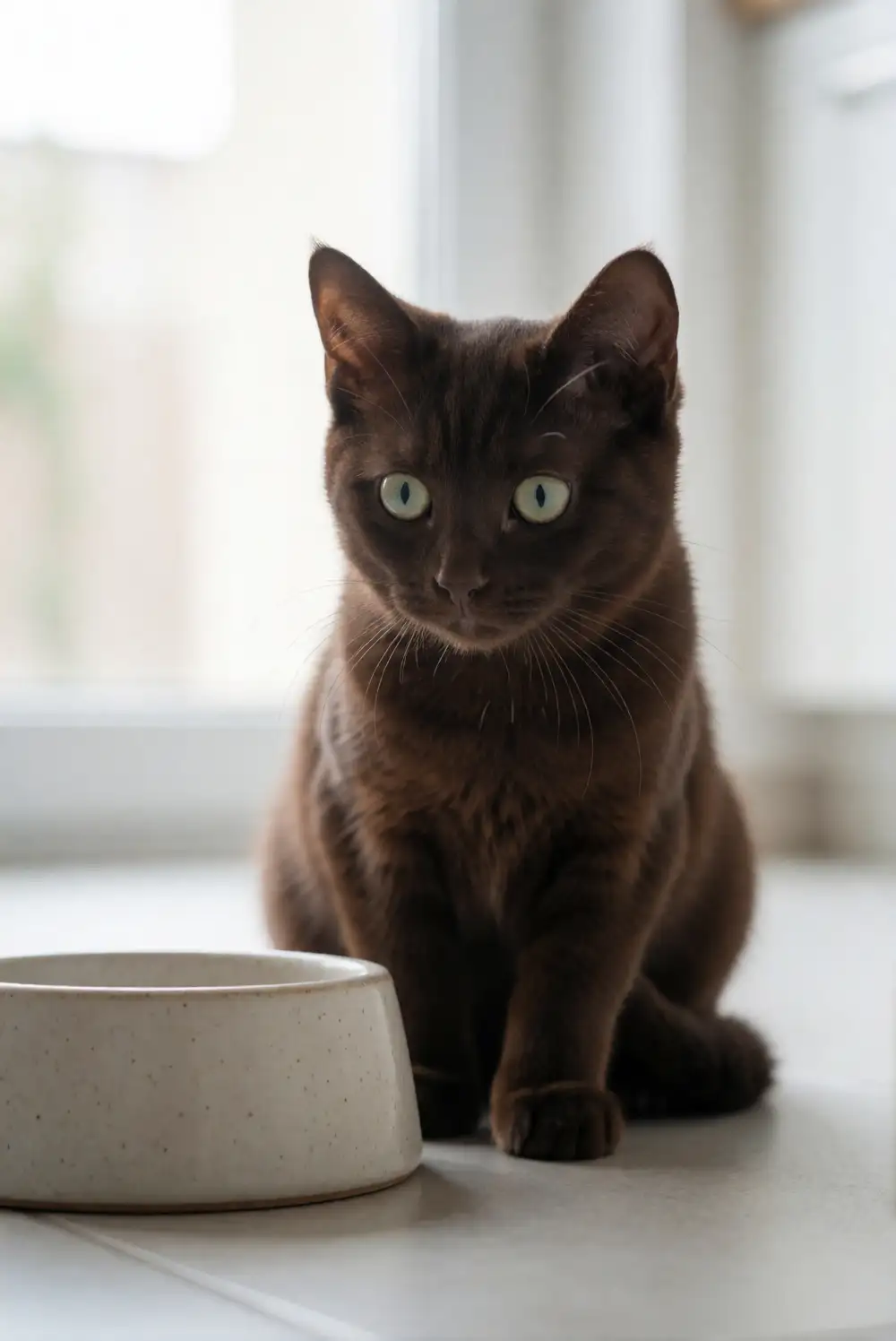
A Havana Brown kitten needs a complete, balanced diet for growth—not a special food just because of the breed. These medium-sized, muscular cats have a distinctive solid chestnut-brown coat and lively, people-oriented temperament, so track your kitten’s growth and appetite rather than assuming every Havana Brown needs the same portion.
Havana Brown Kitten Feeding Chart by Age
Use this chart as a starting schedule for a healthy kitten. The calorie estimates are broad daily starting points based on body weight, not fixed Havana Brown requirements: weigh your kitten weekly, check the food’s calories, and ask your veterinarian to adjust portions for growth and body condition.
- Under 4 weeks: Nursing from the mother is best. If the kitten is orphaned or cannot nurse, use commercial kitten milk replacer with veterinary guidance; do not give cow’s milk.
- 4–8 weeks: Gradually introduce a soft gruel made with complete kitten food and warm water or kitten milk replacer. Offer four to six small meals daily while nursing continues, when possible.
- 8–12 weeks: Feed complete kitten food in four small meals daily. A rough starting estimate is about 2.5 times resting energy needs (RER): 70 × body weight in kilograms0.75 calories, then multiply by 2.5.
- 3–6 months: Offer three to four meals daily. Around four months, a rough starting estimate is about 2 times RER; kittens’ needs vary, so use the food label and your veterinarian’s advice to set the actual portion.
- 6–12 months: Feed two to three meals daily, usually continuing a growth formula. About 2 times RER can be a starting estimate, but activity, growth rate, and body condition may call for more or less.
- At 12 months: Ask your veterinarian whether your Havana Brown is ready to transition gradually to adult maintenance food. Some cats may need to stay on kitten food a little longer.
To calculate RER, use your kitten’s weight in kilograms; divide pounds by 2.2 to convert. These formulas are estimates, not prescriptions, and become less reliable if a kitten is ill, underweight, or growing unusually quickly. Divide the daily calories by the calories per can or cup on the package to estimate the amount of food, then split it into the chart’s meals.
Choose a Complete Kitten Food
Choose wet food, dry food, or a combination labeled complete and balanced for kitten growth or all life stages under AAFCO nutrient profiles. Growing cats need suitable levels of protein, fat, minerals, and taurine. Havana Browns do not have a recognized breed-specific diet, and their short, close-lying coat does not require a special food.
Wet food can help increase water intake, while dry food is convenient to portion. If you feed both, count the calories from each so the total daily amount stays on target. Avoid relying on adult maintenance food, homemade recipes, or meat alone for a growing kitten unless a veterinary nutritionist has formulated the diet.
Set Portions for Your Kitten, Not the Breed
Food-package charts are useful starting points, but they may not match your kitten’s metabolism or the calorie density of another brand. Measure meals with a kitchen scale or an accurate measuring cup, and keep treats to no more than about 10% of daily calories. Treats should not replace nutritionally complete meals.
At regular checkups, ask the veterinarian to assess weight and body condition. You should be able to feel the ribs beneath a light covering and see a waist from above; a rounded belly alone is not a reliable measure of healthy growth. Adjust portions gradually if your kitten is gaining too quickly or failing to follow a healthy growth pattern.
Build a Calm, Consistent Feeding Routine
Offer meals in a quiet spot and keep fresh water available, ideally away from the litter box. Havana Browns are often social and may enjoy a predictable routine, but avoid feeding extra food just because your kitten asks for attention. For kittens who eat too fast, divide the meal into smaller servings or use a kitten-safe slow feeder.
Many kittens do well with a mix of wet and dry food, but consistency matters more than a particular feeding style. Store food as directed, wash bowls regularly, and discard wet food left out for too long, especially in a warm room.
Transition Foods Safely and Avoid Risky Extras
When changing foods, transition over about seven days: start with a small amount of the new food mixed into the old, then gradually increase it. A slower change may suit a kitten with a sensitive stomach. Contact your veterinarian if vomiting, diarrhea, poor appetite, or lethargy persists rather than assuming the kitten will simply adjust.
Never offer onions, garlic, chocolate, alcohol, grapes or raisins, or foods containing xylitol. Keep bones, raw dough, and raw meat away, too; raw diets can carry pathogens and may not provide balanced nutrition. If you’re browsing Havana Brown kittens or breeders on CatHatch, ask what food the kitten currently eats and request a gradual-transition plan.
Frequently Asked Questions
How much should a Havana Brown kitten eat each day?
There is no single portion that fits every Havana Brown kitten. Start with the calorie guidance on a complete kitten food label, divide the daily amount into age-appropriate meals, and adjust with your veterinarian based on growth and body condition.
How often should I feed a Havana Brown kitten?
Very young kittens need frequent meals, while older kittens can move to fewer servings. A practical schedule is four meals a day at 8–12 weeks, three to four from 3–6 months, and two to three from 6–12 months.
Should Havana Brown kittens eat wet or dry food?
Either can work if the food is complete and balanced for growth. Wet food supports water intake, and dry food can be convenient; combining them is fine when you count calories from both.
Do Havana Brown kittens need a special breed-specific diet?
No breed-specific diet is established for Havana Browns. Choose a reputable complete kitten food and tailor the portion to your individual kitten’s age, weight, activity, and health.
When should I switch my Havana Brown from kitten food to adult food?
Many cats transition around 12 months, but timing can vary with development and health. Ask your veterinarian when to switch, and mix the new food in gradually over about a week.