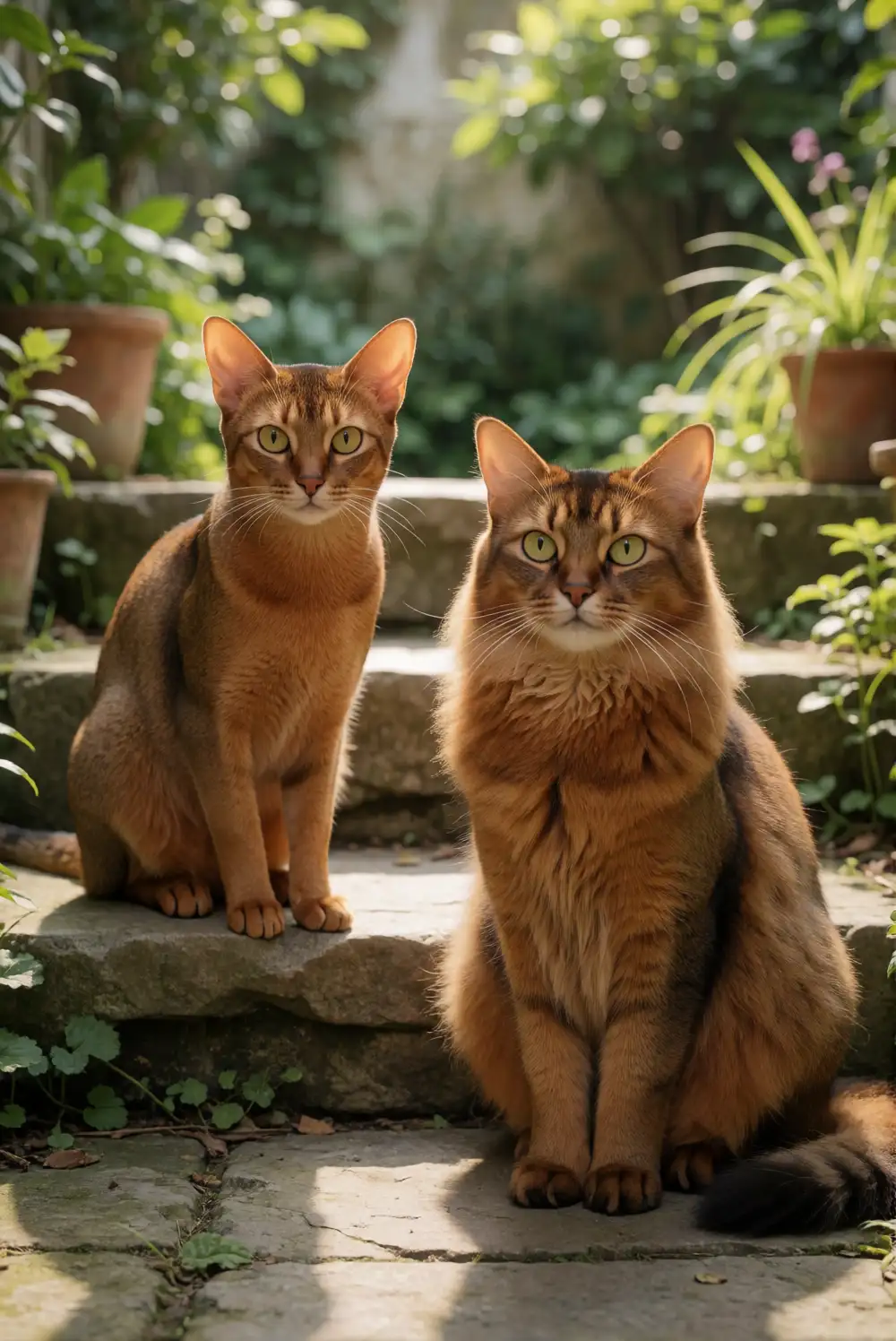
The Abyssinian and Somali share an athletic build, curious nature, and distinctive ticked coat, but their coats create different care needs. An Abyssinian has short, close-lying fur; a Somali has a longer, softer coat and a dramatic plumed tail.
Abyssinian vs Somali: The Main Differences
These breeds are closely related: the Somali developed from longhaired cats in Abyssinian lines. Both are medium-sized, muscular, and built for climbing and exploring. Their coats commonly come in ruddy, red, blue, and fawn shades, with each hair banded in multiple colors—a pattern called ticking.
The quickest way to choose is to consider grooming and appearance. Abyssinians have a sleek, low-maintenance coat that shows their defined musculature. Somalis have a moderate-length coat, often with a neck ruff, britches on the hind legs, and a full tail. Both are energetic, social cats that need daily play and interaction, so neither is ideal for someone seeking a very quiet, hands-off companion.
Appearance and Coat Care
An Abyssinian’s short coat lies close to the body, and its ticked pattern gives the cat a warm, finely textured look. Regular brushing—often once a week—is usually enough to remove loose hair and keep the coat neat. The breed’s large ears, alert expression, and long legs contribute to its distinctive, agile appearance.
The Somali’s coat is silky and longer, but it is not typically as dense as a Persian’s. Brush it a few times a week, paying attention to the tail, ruff, and areas where friction can cause tangles. During seasonal shedding, more frequent combing may help control loose fur. Both breeds benefit from routine nail trims and dental care; a Somali simply calls for more coat maintenance.
Personality and Activity Level
Abyssinians are intelligent, inquisitive, and often happiest when they can follow household activity from a perch or join in. They tend to enjoy climbing, puzzle feeders, and interactive games, and many form close bonds with their people without wanting to sit still for long stretches. Their curiosity makes secure windows and supervised outdoor access important.
Somalis are similarly playful and people-oriented, with a reputation for being lively well into adulthood. They may be especially entertaining as they investigate, leap, and carry toys around. Individual temperaments vary, but both breeds usually do best with daily attention and an enriched environment. If a cat will be alone for long hours, consider whether you can provide enough companionship, play, or a compatible feline friend.
Health, Lifespan, and Breeder Questions
Abyssinians and Somalis commonly live around 12 to 15 years, though an individual cat’s lifespan depends on genetics, veterinary care, and lifestyle. Health concerns reported in these related breeds include pyruvate kinase deficiency (PKDef), which can cause anemia, and progressive retinal atrophy (PRA), which can affect vision. Ask breeders about genetic testing and the health history of both parents. Responsible breeders should be willing to explain their screening practices and provide veterinary records.
Dental disease can also affect cats in these breeds, so establish tooth-brushing or another veterinarian-approved dental routine early. Buying prices vary by location, pedigree, breeder, and whether a kitten is sold as a pet or for breeding; a broad U.S. estimate is about $1,200 to $2,500 for either breed. Avoid choosing on price alone. CatHatch can help you browse available kittens and breeders while you compare health information, socialization, and the conditions in which kittens are raised.
Which Cat Is Right for You?
Choose an Abyssinian if you love a sleek, short-coated cat and want a simpler brushing routine, while still having plenty of time for an active companion. A Somali may suit you better if you prefer a flowing coat and plumed tail and are comfortable combing regularly. Coat length does not determine how affectionate or energetic an individual cat will be, so meet kittens and ask about their personalities.
Either breed can thrive in a home that offers climbing spots, play, and consistent company. Before deciding, consider your schedule, grooming preferences, and budget for routine and unexpected veterinary care. CatHatch listings can help you compare Abyssinian and Somali kittens from breeders and find a match for your household.
Frequently Asked Questions
Are Abyssinian and Somali cats the same breed?
They are closely related but recognized as separate breeds. The Somali is the longhaired counterpart that developed from Abyssinian lines, while the Abyssinian has a short coat.
Which cat sheds more, an Abyssinian or a Somali?
Both shed, but the Somali’s longer coat can make loose hair more noticeable and requires more frequent brushing. An Abyssinian’s short coat is generally easier to maintain, though it still benefits from regular grooming.
Are Abyssinian or Somali cats good for first-time owners?
Either can suit a first-time owner who is ready for an active, curious cat and can provide daily play and companionship. Their energy and need for stimulation may be challenging for someone expecting a low-activity pet.
Do Abyssinian and Somali cats like being held?
Some enjoy being held, but many prefer to stay on the move and interact on their own terms. Spend time with a kitten or ask the breeder about its temperament rather than assuming the whole breed will behave alike.
What health tests should I ask an Abyssinian or Somali breeder about?
Ask whether the parents have been tested for PKDef and PRA, and request details about other health screening and veterinary care. A responsible breeder will explain test results and discuss relevant health history in the kitten’s family.